Cuba – Classic all the way! Gems in Havana.

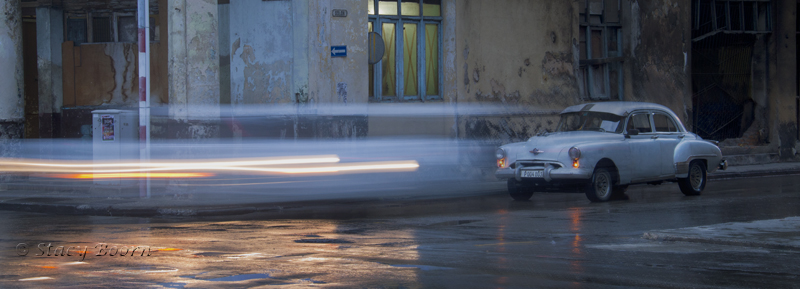
In 1959, following the revolution, the new leader of Cuba, Fidel Castro, froze the importation of automobiles. Many of the automobiles that were already in Cuba became, through the passage of time, vintage automobiles, often the kind sought out by collectors.
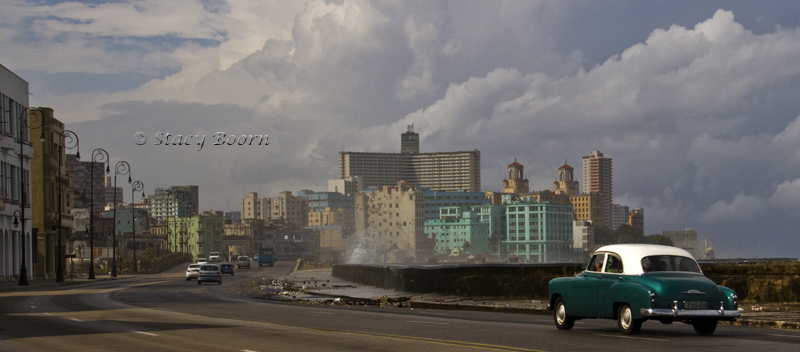
Driving Havana's Melecon - Sea walled drive/walk

Driving Havana’s Melecon – Sea walled drive/walk

Around 60,000 of these cars may still be traveling the Cuban countryside and the alleys of Havana. But finding a collectible of value will be a challenge. For every hidden gem, there are thousands of beaten-up clunkers, largely stripped of their original parts to keep other cars rolling.
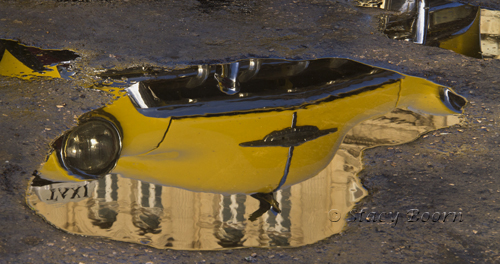
Cuba 2 - Car reflection copy

TAXI reflected in street puddle

Some cars are in pristine condition and others are barely held together by pounds of bondo and duct tape — mid-century Chevys, Studebakers, Oldsmobiles, Cadillacs and Buicks, and they still rumble down Havana’s Malecón. Tourism has become the leading industry of Cuba, and the travelers from Europe, Asia, South America, Mexico and now the U.S. all want a ride through town in a classic pink or purple convertible.
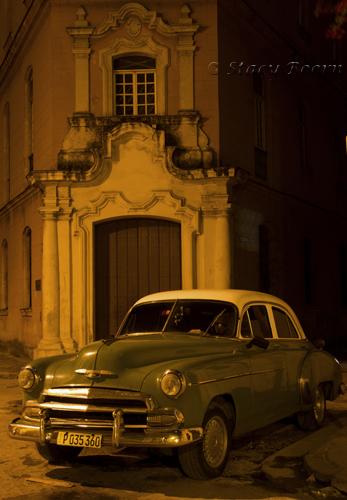
Cuba 2 -H Car Night 1 copyWith the easing of relations between the U.S. and Cuba, some of those 60,000 vintage cars will eventually make their way into collectors’ hands stateside.  But buyer beware:  While a Cadillac convertible in Cuba may look authentic, a closer examination may reveal hundreds of thousands of miles on the odometer and a multitude of makeshift fixes, and perhaps even a (gasp!) Peugeot diesel engine under the hood. That said, experts anticipate a niche market of buyers might be willing to pay a premium to own a piece of Cuban history.  But will their owners, proud as they are of their heritage, be willing to sell them off?  It is part of the joy to watch the car owners attempt to be as colorful and brilliant as their autos, all in the style of 1959.
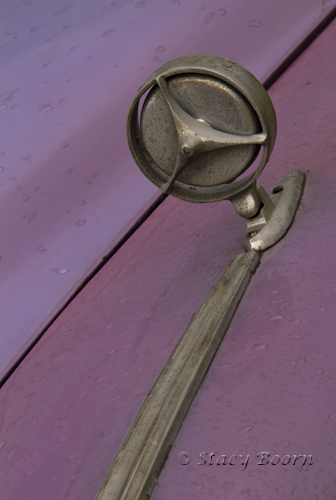
Cuba 2 -Car Detail 1 copyLifting the U.S. embargo would mostly help Cuban classic car owners buy parts. Most of the cars are far more valuable in Cuba than they would be in the United States. Not only have they lost so many of the original parts that collectors crave, but the old workhorses also provide crucial income for their owners. As taxis, their famously spacious interiors can accommodate half a dozen passengers.

Cubans squeeze in for the equivalent of $0.40, while tourists like to take rides in the spiffier-looking convertibles for about $30 an hour. It is well worth it, if I do say so myself!

Cuba 2 - Ballet School 012 copy2Similar to the chicken-wired bumpers of the old cars are the shredding ribbons of the ballet shoes of the students at the School for the National Ballet in Havana. It was originally founded in 1931, but grew into the prestigious institution it now is in the 1960s, after Fidel Castro came to power and declared that art and education were for the people. Talented children from all over the island can get free ballet training. The school is open to every child – determined by talent and potential, not economic stratum.
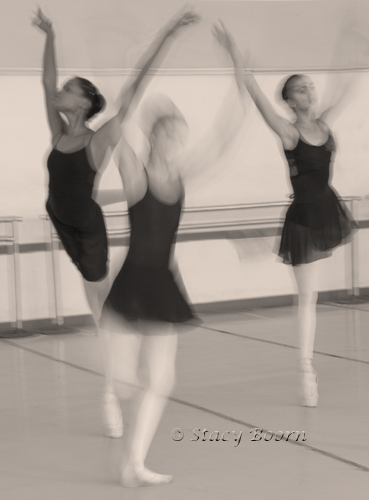
Cuba 2 - Ballet School 023 copyTypically, children are accepted when they are ten years old for five years of intense training; they then do a couple more years of training at a professional level. But only a handful of graduating students can be selected for the country’s premier company, the Ballet Nacional de Cuba.

Why are we westerners/capitalists taught that everything in socialism and communism is evil? Those negative assertions melted to nothingness for me when I watched a class of 12-16 year olds practicing Swan Lake. Each graceful movement and pose performed in the un-air-conditioned tattered dance hall was a testimony to both beauty and the successes of the revolution for the people of Cuba.
Posted in Weekly 2 | Tagged , , , , , , , | Comments Off on Cuba – Classic all the way! Gems in Havana.

January – Hola Cuba! Installment #1

I have been back from my trip to Cuba and Florida (Ft. Meyers and the Everglades – for bird photography) for about two weeks. A busy work schedule has kept me from thoroughly editing my 5,000 images and identifying the “keepers

Cuba 1 - Havana Car copyThe Cuba part of the trip was only 10 days, which, in my opinion, was a little too short. I would have liked to have seen some of the beautiful beaches on the eastern coast (Manzanillo and Santiago – not Guantanamo). The trip was spearheaded by Bay Area photographer Brenda Tharp who leads groups for Strabo Tours out of New York. She has been bringing photography groups (12 people max) to Cuba for the past few years since the issuing of the “people to people/culture” visas.

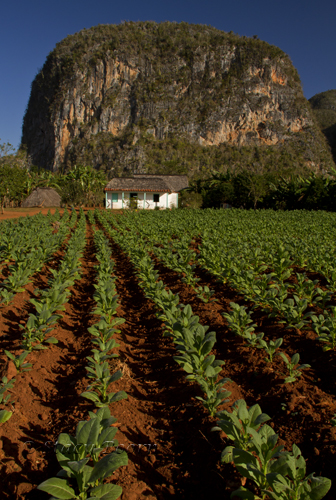
Tobacco Farm in Vinales

Tobacco Farm in Vinales

We spent time in the countryside of Vinales, the towns of Cienfuegos and Trinidad, and several days in and around Havana. The people were friendly and delightful. Of course I loved seeing all those 1950-1960 Chevys, Fords, Oldsmobiles and Cadillacs. It is amazing how their owners have been able to keep them running –some looking as spiffy as new, while others seemed to be held together by bondo .

We photographed farmers, cigar rollers and youth at the National Ballet School as well as many street scenes and people along the way. We had the opportunity to meet and converse with well-known political cartoonist Ramses Morales Izquierdo and other artists.   Our Cuban guide and bus driver were both well educated – advanced degrees in engineering, but they told us they make more money in the tour business.

Cuba 1 - School Pledge 2 copyOne morning in Trinidad I wondered into an elementary school while the students were arriving. I asked to enter and was given a nice smile and head nod to join the children in the court yard where several classes were lined up for the flag raising ceremony. They enthusiastically sang songs and recited a pledge.

Cuba 1 - Vin Car copyA lot of the colonial buildings and those built with the wealth of the 1920s, especially in Havana, are in need of much repair. But everybody has access to healthy government-provided food and free education. We talked with a GLBT advocate who feels Cuba is making much progress in human rights. Many little farm huts had solar panels, and teenagers often gather in small groups singing and playing musical instruments for their own enjoyment. It goes without saying that everybody loves baseball!

Some restaurants are government-sponsored, but now the Paladares (restaurants in homes) are also flourishing. We ate in both – and the food was very delicious! We spent our two nights in Trinidad staying in people’s homes; in Havana we stayed in the 5 star Saratoga Hotel. For ten years after the revolution the hotel was used as a boarding home for the poor, but it has now been restored to its former elegance.

Cuba 1 - Plowing copyThere was wonderful entertainment at the dinners – opera singers (students), folk singers and bands playing typical Cuban music using drums, guitars, bass, and various rhythm instruments including the jawbone of a horse.

The weather was a little too hot and humid for me, but otherwise the trip was a great adventure! The Mojitas and tuKolas were also quite refreshing!  I will let you know when I post a Cuban portfolio on the AWE Gallery website.

Posted in Weekly 2 | Tagged , , , , | Comments Off on January – Hola Cuba! Installment #1

December Week 4 – Unknown Pathways Surprise Us.

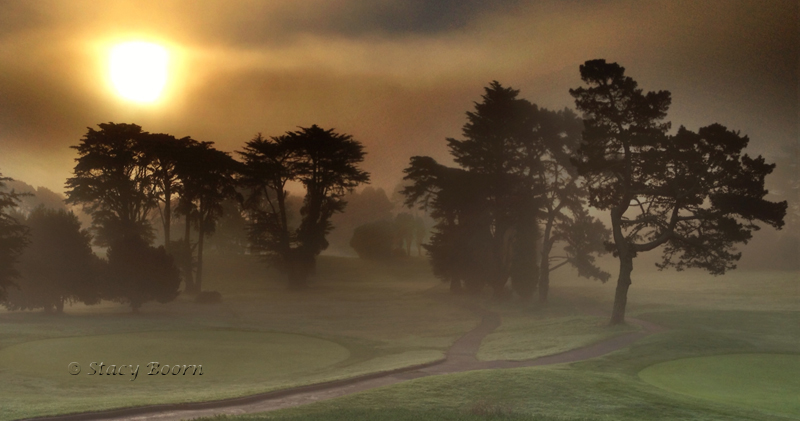
Dec 4 - Golf course Fog copyRecently my spirituality has led me to enjoy the various sights and experiences along the path rather than worry about the destination. Even more, I have been inspired to try different paths such as the fog-laden walkway that rings our local golf course. Though I would never attempt to play the game, the winding golf course fairways provide beautiful scenes as well as mystical metaphorical vistas.

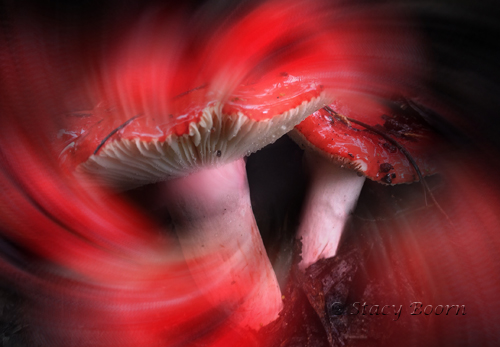
Dec 4 - Russula Burst copyOn the evening of December 24th, with others in the herchurch community, I sang Jann Aldredge-Clanton’s hymn “O Holy Darkness, Loving Womb.” Her lyrics are set to the familiar tune that also accompanies “O Little Town of Bethlehem.” You can hear the hymn with a wonderful slideshow that Jann produced to embody her hymn. It is imbedded in an article she recently wrote for the Feminism and Religion Blog.

Creative Darkness, closest friends, you whisper in the night;
You calm our fears as unknown paths surprise us with new sight.
We marvel at your bounty, your gifts so full and free,
Unfolding as you waken us to new reality.
 

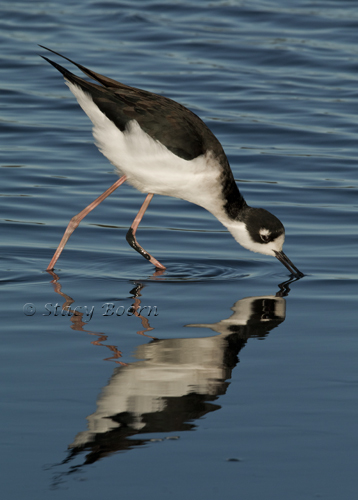
Dec 4 - Stilt copyFog and trees, crashing waves, red Russula mushrooms and migratory birds meet me on my walking paths these past days. They are always wonderful visual surprises. May the unknown paths that await you in the coming year surprise you with new sight/vision/dreams/experiences.

My own first pathway in 2015 will lead me to Cuba via a photographer’s People-to-People trip. I look forward to what promises to be a great learning experience as we interact with the Cuban people and explore the architecture of Old Havana and its new skyline.

Excursions will take us to the colonial town of Trinidad on the southern coast, Vinales Valley, and Cienfuegos. We will walk in the tobacco fields, observe a children’s ballet school, and hear and see presentations of Cuban history, art and culture. Along with my box of (now legal) Cuban cigars, I hope to bring home some stunning images (love those old cars) and stirring stories! My next blog will be post-Cuba.

So for now, hasta luego! (I wish I had learned Spanish years ago.)

Dec 4 - WaveBridge copy

Posted in Weekly 2 | Tagged , , , , | Comments Off on December Week 4 – Unknown Pathways Surprise Us.

December week 2 – Entering the Colors of Winter

Winter in many locations is signaled by a blanket of white snow or at least the dormancy of the lush greens of trees and lawns. But it is not so for the Bay Area. Our pattern of drought is getting a reprieve with some much prayed for rain storms. The coming winter is being ushered in with orange,  yellow and green.

Dec 2 -Tea Garden copyWhen I want a moment of such color, tranquility and harmony I look to the fall/winter leaves at the Japanese Tea Garden in Golden Gate Park. This area was originally created as a “Japanese Village” showcasing a Japanese-style garden exhibit for the 1894 California Midwinter International Exposition.

But sometimes beautiful places have bittersweet memories. When the fair closed, Japanese landscape architect Makoto Hagiwara remained on site to create and maintain a permanent Japanese style garden as a gift for posterity. He used his personal wealth, passion, and creative talent to create a garden of utmost perfection.

Dec 2 - Grape Leaves copy

Last Leaves on a Grape Vine – Jack London State Park

But in 1942 the Hagiwara family, along with approximately 120,000 Japanese Americans, was forced to evacuate its home and move into an internment camp. When the war was over, the Hagiwaras were not allowed to return to their home at the tea garden.

Perhaps the beautiful colors around us can help us remember and even leave behind the gloomy winter times of our histories and souls and lead us to communities and systems of transformational harmony. With such a prayer on our lips and in our hearts may we enter into the winter that is before us.

Dec 2 - Dates copy

Fallen Dates on Palm Trunk

Many of the mystics loved to draw analogies between nature and grace. Mariam Baouardy (1846-1878) found comfort in such comparisons even under the stress of diabolical persecution. In her spiritual poetry and songs she wrote:

Hail, hail, Tree of Life,
that gives us the fruit of Life!
I see on thy leaves
   these words are written:
Have no fear of anything!
  Thy verdure says: Have hope.
  Thy branches tell me: Charity.
  And thy shade: Humility.


Posted in Weekly 2 | Tagged , , , , | Comments Off on December week 2 – Entering the Colors of Winter

December Week 1 – What is a mushroom?

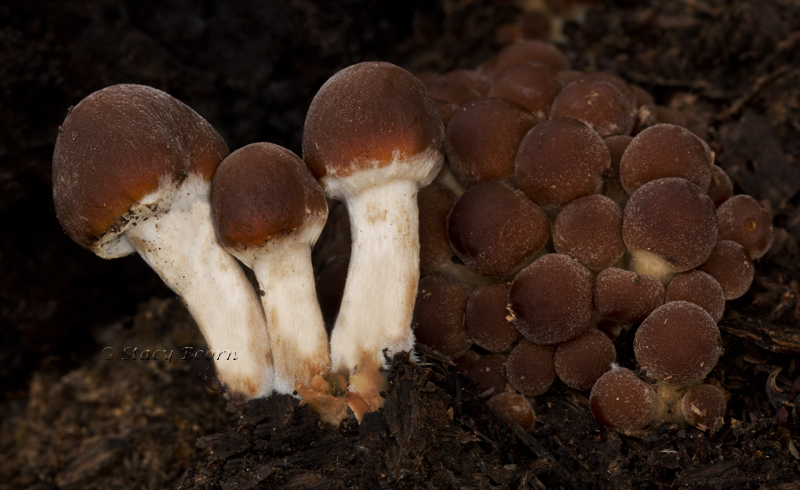
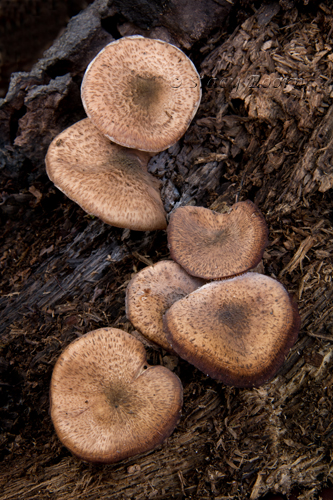
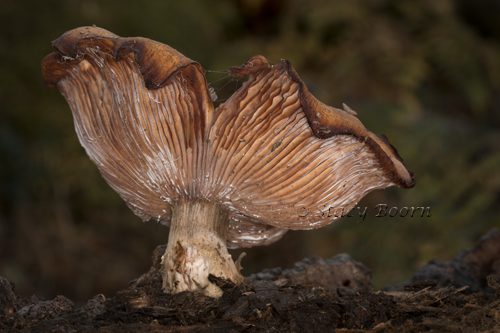
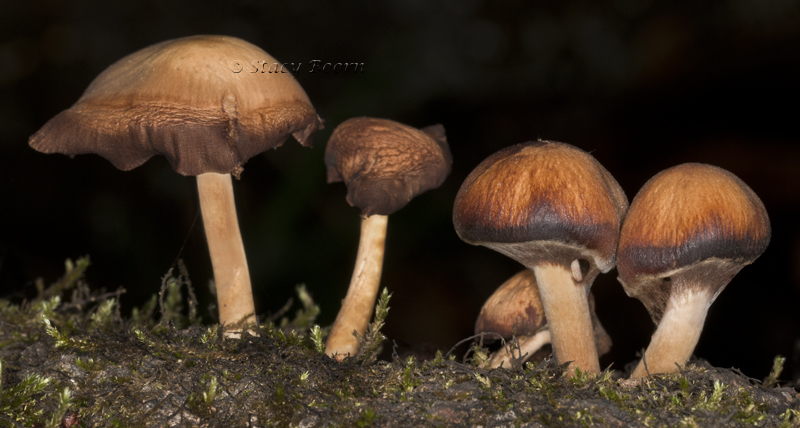
What is a mushroom? For me a mushroom represents a line, a circle, a curve, a particular color, or a section of a pattern within a composition that tells a bit of nature’s story through my camera lens. Photographing them is a great deal more than a “point and shoot” art. Dec 1 - Mush on Log 2 copy

I love it when I find an interesting mushroom pushing up pine needles from the earth below, or sitting on decaying logs, or protruding from the plushy green moss beneath the redwoods. When I find one, I look at it from every angle to discover a unique composition for my camera. Often this requires kneeling down, sitting on the ground or lying on my stomach.

Dec 1 - Mush on Log 3 copyThen, too, I’ve learned that browsing mushroom field guides alone isn’t sufficient for identifying most fungi, since mushrooms seem to have so many look-alikes. An expert mushroom hunter explained that one needs to make a “spore print,” a skill I haven’t yet acquired. Not to worry, my mushroom images are not created primarily for identification purposes, but rather they are like pigment on nature’s pallet presenting me with gorgeous entrances into the essence of the earth herself.

Andy Goldsworthy, one of my favorite artists, uses things in nature to create his art. He’s created things out of driftwood at low tide and then, when the tide comes in, the beautiful art structure is dismantled bit by bit in the natural flow of the water. Goldworthy has worked in freezing temperatures, using his hands to melt the edges of icicles in order to connect one to another, creating stunning sculptures. The sculptures’ longevity, of course, depends on the weather.

Dec 1 - Mush on Log 4 copyIn photographing mushrooms I admit to doing a bit of artistic gardening – bending a mushroom up so I can be right beneath it’s gills, tenderly moving a bit of green moss to enhance the background, or gently rolling back a piece of decaying bark to discover the point where the mushroom stem connects to its host.  Sometimes my scene-enhancement activity requires dusting off the top of a mushroom so that only one or two of the needles that it has pushed up from the ground remain on its cap.

What is a mushroom? It is the fruiting body of fungus. Fungi are a unique group of organisms, distinctively different from plants, animals and bacteria. Most mushrooms can be placed into one of three categories based on how they take in nutrients: saprobic, parasitic and mycorrhizal. I think the images I am presenting to you today, all growing on the same decaying log, are the saprobic type. This kind of fungi absorbs nutrients from wood, dung, and plant litter. They are crucial agents of decay and of the production of humus which becomes a part of the soil structure needed for plant growth.

Dec 1 - Mush on Log 1 copyI don’t know if the fungi are conscious of the importance they play in the web-of-life. “Climate is a driving force for the evolution of our unique fungal flora,” according to the field guide, California Natural History Guides – Western North American Mushrooms. Therefore our awareness and care of the climate and our partners in the web-of-life are important components of our spirituality and stewardship as well as they can be the focus of our art forms which are often the prophetic voice of the good earth.

For additional mushroom images visit my Fungi Art portfolio.

Posted in Weekly 2 | Tagged , , , | Comments Off on December Week 1 – What is a mushroom?

November week 4 – Reshaping the reflection…

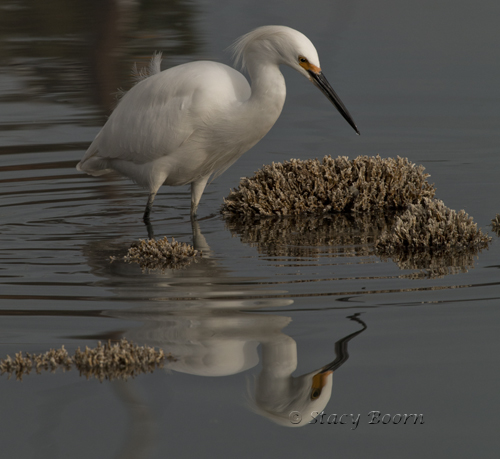
Nov 4 - Reflection WEBI love to photograph things reflected in water. Reflections can be pure mirror images, abstracts created by gentle breezes on the surface of the water, and, sometimes, beautiful designs caused by jumping fish or wiggly Snowy Egret legs stirring up the bottom of a pond.

These reflections remind me of the constant discussions of the meaning of “the image of God/dess.” What does it mean for us to reflect that divine persona or to be created in her image? Reflections in water reveal a lot about the possibilities of being or living into the image of the sacred.

Nov 4 - Bouy WEBThere are times when it seems we are exact replicas of that which we believe to be the divine mystery. There are other times when compassionate human actions seem to be ripples emanating from the divine presence. At other times we want the spirit/wind to blow in a variety of directions creating something that is totally new and represents our own being with just little hints of that one whose image we reflect.

In her introduction to “Rejoice, Beloved Woman! The Psalms Revisioned,” Barbara J. Monda states my belief: “In a perfect world God/dess is genderless, and all persons, regardless of sexual category, can relate to language used to inspire the soul to morally virtuous expression. We do not, however, live in this world yet, and I believe that before we can realize this ideal we must acknowledge that there is gender imbalance present in society, and in scripture as well, that empowers men at the expense of women. In Rejoice, Beloved Woman!” the author says, the revisioning of the psalms “offers to women the experience of having, among many other things, God in her own image and words that portray a female way of being that embodies strength and nurturing.” p. 9

Nov 4 - Egret 02 WEBIt is also a little presumptuous, to say the least, that only we humans reflect the image of the divine presence. The creatures and the cosmic elements are also jewels revealing the beauty of the eternal mother, the queen of heaven and lady of love! The egret for me is one of those lovely reflections of her presence.

Among the most elegant of the herons, the diminutive Snowy Egret sets off immaculate white plumage with black legs and neon-like yellow feet. The Snowy Egret eats mostly aquatic animals, including minnows, frogs, worms, crustaceans, and insects. It uses its bright yellow feet to paddle in the water and probe in the mud, rounding up prey before striking with its bill.

Nov 4 - Egret WEBIn calm glassy waters this shaking of the feet causes the water to slowly circle the bird and ripple outward reshaping the reflection like a fine cut-paper design. The pictured egret was wading at the water’s edge in early morning light at the Larkspur Marsh Bird Refuge.

Breeding Snowy Egrets plumage once fetched astronomical prices in the high-end hat fashion industry, endangering the species. Early conservationists rallied to protect egrets in the early twentieth century, and this species is once again a common sight in our shallow coastal wetlands.

We have much to see and be in reflections mirroring back and recreating the image they hold.

Posted in Weekly 2 | Tagged , , , , , , , , , , | Comments Off on November week 4 – Reshaping the reflection…

Nov. week 3 – The river is flowing back to the sea – HURRAY!

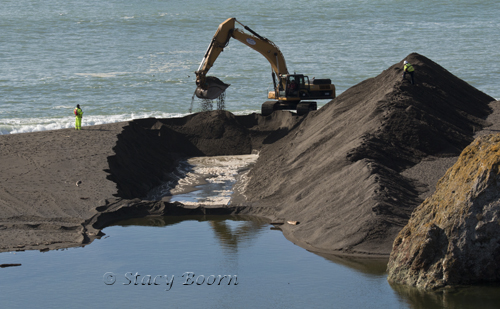
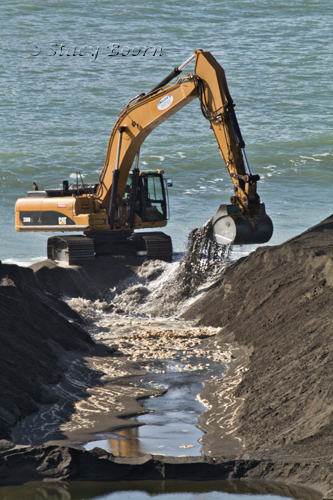
Nov 3 - RR Mouth 1 WEBBefore the gentle rains arrived this week the waters of the Russian River were flowing leisurely toward the Pacific. But recently the river movement was so slow that there wasn’t enough power behind it to push through the beach sands to make its natural connection with the ocean.

The Russian River Estuary closes various times throughout the year as a result of a sandbar forming at the mouth of the river. In opposition to the river’s flow, the ocean waves transport sand landward, rebuilding the beach that was removed by river outflows. Closures result in the ponding of the river behind the sandbar, and thus the water level increases in the Estuary.

Nov 3 - RR Mouth 2 WEBNatural breaching events occur when the estuary water surface levels exceed the sandbar height and flows over the top the sandbar, carving an outlet channel. But public agencies have also been involved in breaching the stubborn sandbar since at least the 1960s.

This past week the steelhead trout were anxiously waiting in the ocean anticipating the moment they could swim upstream. So, with a little help from the Sonoma County Water Agency, the sandbar was breached. I expected to hear a tumultuous gushing sound once the river began to pass through the newly formed sand walls. But it was a surprisingly gentle flow with ribbon-like ripples heading to the sea’s distant horizon.

Like other rivers along the California coast, the Russian River, its estuaries and tributaries are home to an abundant wildlife community in and along the river and are a key spawning ground for native Coho and Chinook salmon and the famous Steelhead trout.

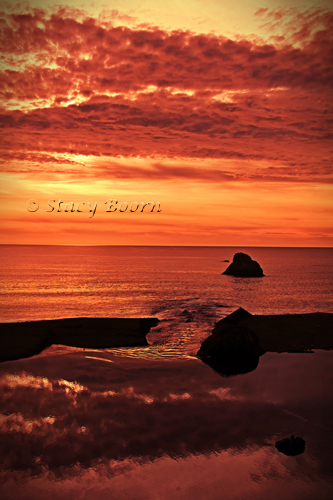
Nov 3 - RR Mouth 3A WEBThe mouth of the Russian River flows past the town of Jenner and out through Goat Rock beach, the northernmost park of Sonoma Coast State Beaches. It is a wonderful place for a meditative beach walk and to enjoy the ocean breeze, feel the fog as it rolls in and out, and watch the soaring sea birds while listening to the singing of the harbor seals. One is easily inspired by being on this edge of the American continent.

Whether by nature or back-hoe, the breaching reminds me of the chant, “The River is Flowing.” This chant describes the river’s flow of life as it grows towards our universal oneness. It invokes the spirit of water and of the Mother and can connect us to our deep spiritual journey and emotional expressions.

The river is flowing, flowing and growing.
The river is flowing back to the sea.
Mother Earth carry me, child I will always be.
Mother Earth carry me back to the sea.
 
Chant by Diana Hildbrand – Hull in Circle of Songs, Compiled by Kate Marks.
Posted in Weekly 2 | Tagged , , , , , , , | Comments Off on Nov. week 3 – The river is flowing back to the sea – HURRAY!

November week 2 – Journey through the Windows

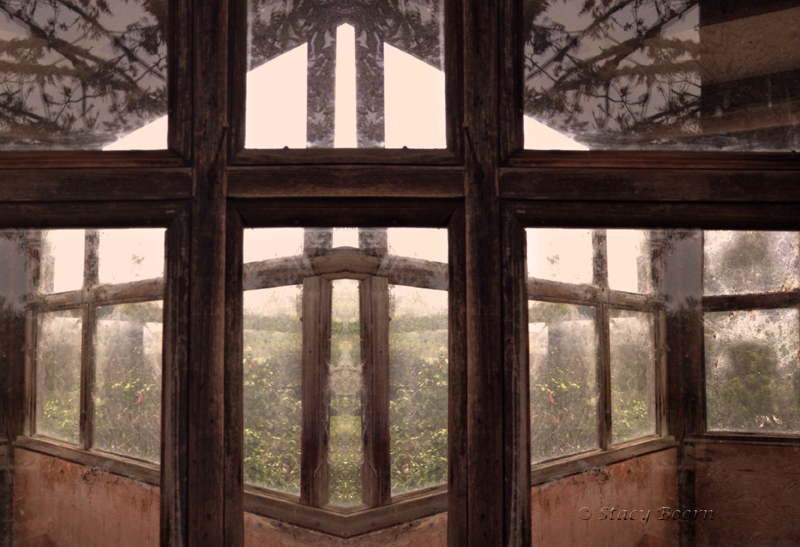
Windows have multi-dimensional meanings. Their framework and panes separate two distinctive worlds. Not just an obvious inside and outside, but an incredible array of the spaces that are either in relationship or in tension with one another. Very much like the idiosyncrasy between the dream and the awakened state. Windows, from the simple panes in a shed to the grand stained glass of a cathedral, imply an interactive relationship between us and the infinite unknown.

Nov 2 - Windows 2a WEBIn The Virtual Window: From Alberti to Microsoft, Anne Friedberg examines the window as metaphor, as architectural component, and as an aperture to the dematerialized reality we see on the screen. Anne Friedberg was Professor of Critical Studies in the School of Cinematic Arts, University of Southern California, and also the author of Window Shopping: Cinema and the Postmodern.

Nov 2 - Windows 3 WEBThe window metaphor has also provided a framework for the human desire to transcend its linear journey to something spiraling in the great beyond. Windows represent new possibilities as in the phrase “the window of opportunity.” Perhaps this is why the Microsoft operating systems was named “Windows.” But windows are also paradigms of the eyes, which are said to be “windows to the soul” because looking into someone’s eyes helps you understand the person.

The windows in these images are heavily scratched so that you cannot actually see into or through them. Use your imagination to enter the space behind them as if entering the holy of holies in the places most sacred to you. Spend time there, imagine what you see out of the windows from that sanctuary and allow that vision to carry you into a peaceful journey.

Nov 2 - WindowWater WEBDivine Eye,
You see the heart and the pain
   of your creatures,
the tears of the water
   and the cries of the wind,
the movement of the earth
   and the flow of the fire.
In that vision enable us to be
   attuned to your ways
   and the lives of others:
that, entering the window
   of their soul, heart, mind
we summon song and dance of hope
to offer healing and wholeness as
  you have given your balm freely to us.
For You are the virtual window
through whom we dare to dream.
 
Blessed be!


Prayer and images © Stacy Boorn, 2014

Posted in Weekly 2 | Tagged , , , | Comments Off on November week 2 – Journey through the Windows

November Week 1 – Feel the sea breezes and give thanks!

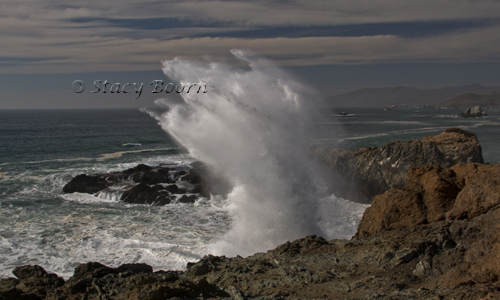
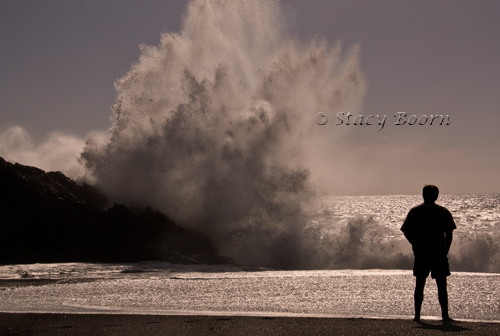
Nov 1 - DL  Wave copyIn 2010 the famed nature photographer Frans Lanting provided images for a National Geographic Magazine article on water. These words opened the article: “The amount of moisture on Earth has not changed. The water the dinosaurs drank millions of years ago is the same water that falls as rain today. But will there be enough for a more crowded world?”

I often contemplate these words when ocean swells are crashing on the jagged rocks that line the shores, sprinkling my face in the sea breeze. The drop running down my check may once have moistened the rough skin of a T-Rex. Things last forever it seems. Then the reality sets in that changes in the atmosphere these days are not “natural” and are bringing irreparable damages to our no longer “sure and certain future” as a planet.

Nov 1 - Wave DL Beach WEBWe’ve lately raised the Earth’s average temperature by .74°C (1.3°F), a number that sounds trivial. But these words do not: rising sea levels, flood, drought and hurricanes. Water is the discernible face of Earth’s climate and, therefore, climate change. Shifting rain patterns flood some regions and dry up others.

The human race is slow to give up on our myth of the Earth’s imperishable generosity. We pumped aquifers and diverted rivers believing there would always be an endless supply of water to support our expansion. Like the crashing of the sea waves we expect the supply of water to never stop coming.

Water on Car Hood

Water on Car Hood

The aforementioned article ends with these words: “The gentle nudge of evidence, the guidance of science, and a heart for protecting the commons: these are the tools of a new century. Taking a wide-eyed look at a watery planet is our way of knowing the stakes, the better to know our place.”

Feel the sea breeze and thank Mother Earth for sharing her waters … and then do something to help her keep the rivers and the waves in regenerative motion!

Photos:  Waves at Duncans Landing along the Sonoma Coast.


Posted in Uncategorized | Comments Off on November Week 1 – Feel the sea breezes and give thanks!

October Week 5 – Seeing Orange: Parts of the Past

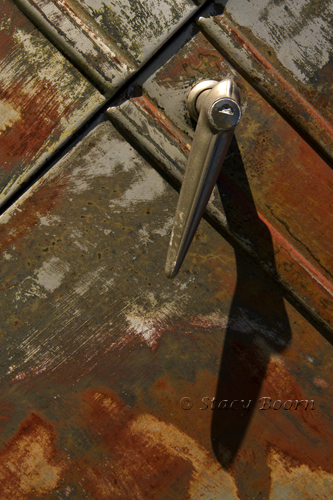
Oct 5 - DoorHandle WEBThis morning I asked the people of the herchurch community if they knew the proper liturgical color for the day. For an answer to this question we usually look to our organist whose shirt color is always in tune with the church calendar. Although his shirt was red, the congregation shouted: “Orange, go Giants.” Even a feminist congregation roots for the home team.

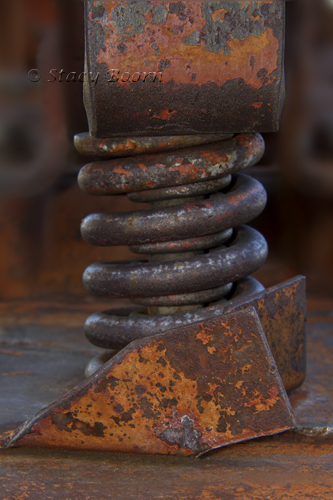
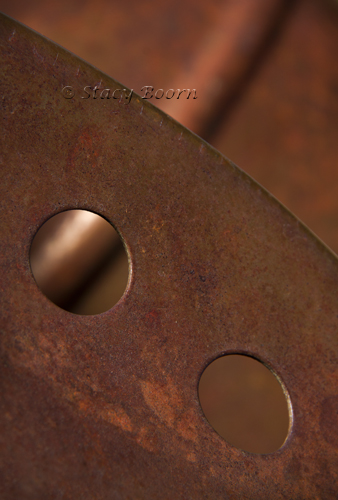
Steve wore red because many Lutheran congregations observe Reformation Day on this last October Sunday. This week’s photo images portray neither a liturgical nuance nor a cheer for the home team in the World Series. They are for the most part orange/red as a result of rust and peeling auto paints.

Rusting John Deers and Ford pickups abandoned in fields and collapsing barns seem to proclaim as much a sense of Americana as baseball. Each spring a hinge and bolt stands at attention, giving salute to the ingenuity of an era almost gone by.

Oct 5 - Spring WEBThese little parts remind me of my grandfather, Seneca Ray Deuel. He had bins and coffee cans filled with every little nut, screw, spring, tube, wire and electrical fixing collected over a life-time.

Ray, as his friends and family called him, was an electrician for the General Electric plant in Schenectady, New York, when GE was at its heyday in that location along the famed Eire Canal. Then he went on to own the first TV repair shop in town. He refurbished all kinds of appliances, and, if he didn’t have the needed part, he just welded stuff together to create a part better than the original.

As a kid I loved being in my grandfather’s workshop. Huge TV tubes the size of pumpkins were always hooked up to some kind of electrical gizmo that determined if they were receiving or giving electrical currents. It was like being on the bridge of the Starship Enterprise, and I was right next to the “captain,” or “Pop,” as I called him. Yikes, that dates me.

Oct 5 - TractorSeat WEBI don’t know if my grandfather was named for the town of Seneca or for the Native Americans whose trails wind through the land of his birth. What I do know is that my grandfather’s name sake is a most beautiful portion of New York State, between what is known as the Finger Lakes. Today, much of that town still looks like it did in its founding days in the late 1700s. So what is a little rust when we can trace our heritage through centuries?

Or maybe Seneca Ray Deuel was named after Seneca Falls where you find the Women’s Rights National Historical Park which preserves the sites associated with the 1848 first Women’s Rights Convention and the National Women’s Hall of Fame. Here you immerse yourself in the lives of great American women, past and present. Their vision is not confined to the struggle of bygone years, but a continuing call to vigilance as we work together for both the equal rights amendment and the promotion of women in every field.

Orange/red today is for Seneca – (almost) my home team.  Photos:  Door handle and shadow on  an old pickup, four inch spring ribbon-ed in rust and an edge of a tractor seat.


Posted in Weekly 2 | Tagged , , , | Comments Off on October Week 5 – Seeing Orange: Parts of the Past