February Week 2 – Orange on the Water (and in it!)

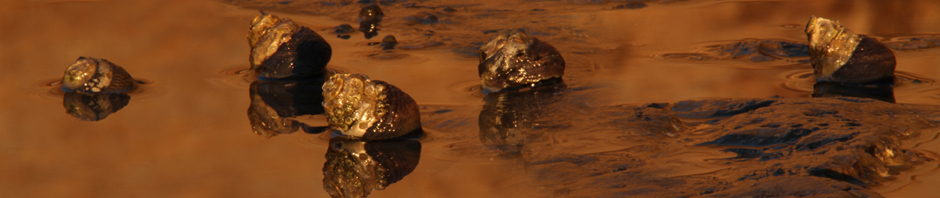
I expected that red would be the color that would dominate my thoughts during the second week of February.  Valentine hearts and huge firecrackers for the Chinese Lunar New Years were just two of the mid-month reds seen exploding everywhere.  But, strangely enough, subtle oranges were filling my viewfinder.
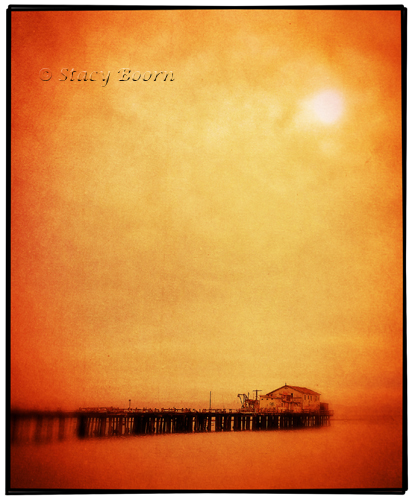
Feb 2 - PC  WebPost-processing helped tease out barely visible oranges in the morning sky at Princeton by the Sea (just north of Half Moon Bay along Highway 1).  Simple subjects such as a decaying dock and aged boathouse surrounded by tranquil bay water and looming rainless clouds felt extremely dramatic. Photography, like painting and other visual arts, is often about the artist projecting her vision onto a scene that is witnessed with the naked eye much differently from her final rendered image.

I am hoping that this image might invite you to a calm place where you are enwombed by the tranquil and nutritious spirit of orange. Imagine walking that long dock and then exploring the vintage timbers of the boathouse. Linger a while to be engulfed by the orange sky that is also reflected in the water below you.
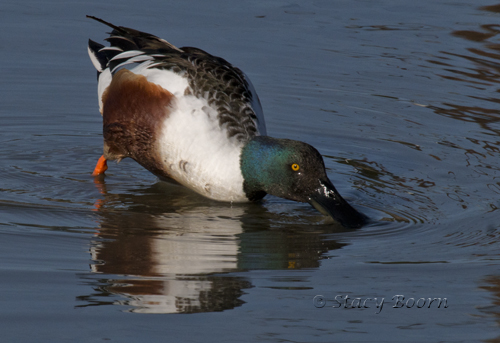
Feb 2 - Shoveler WEB2Orange can also enter your view in little bursts like those colors belonging to the legs, feet and eyes of the Northern Shoveler as it dredges the marsh waters for food.  Perhaps the most visible characteristic of the Shoveler is that large spoon-shaped bill, which widens towards the tip and creates a shape unique among North American waterfowl.

Seeds of sedges, pondweeds, algae, bulrushes, saw grass, smartweeds, and duckweeds, as well as aquatic insects, mollusks and crustaceans are consumed by filtering the water taken in at the bill tip and jetted out at the base.  Many Shovelers winter in California, and a dozen can now be found at Stow Lake in Golden Gate Park.

Orange also signals the beginning of the wildflower bloom as the California and Coastal Poppies begin their annual extravaganza everywhere! As orange awakens the seeds and seed nibblers around us, think of those things that are now awakening in you!
Posted in Weekly 2 | Tagged , , , , , , | Comments Off on February Week 2 – Orange on the Water (and in it!)

February week 1 – Hildegard and the Greening Power

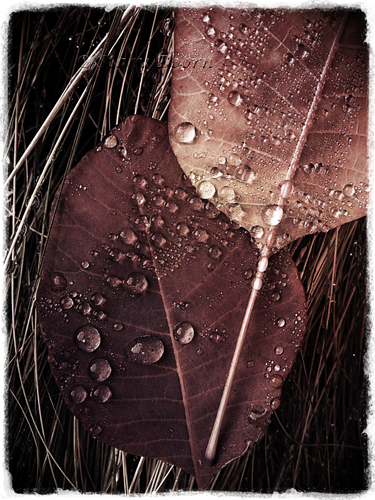
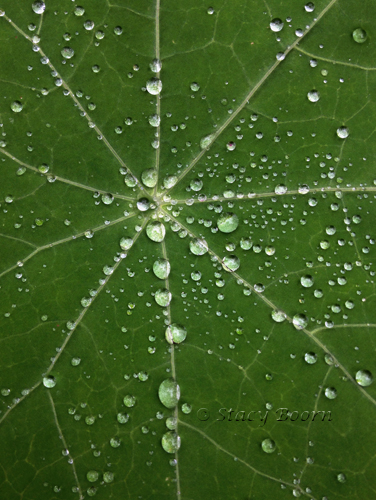
Feb 1 -RainDrops webFinally we have seen rain on the dry and water-barren lands of central and northern California.  Winter, normally a time of greening, looked like it was never coming-round-the-bend.  But the past few weeks have changed the course a slight little bit towards the power of the “greening” of the earth.  Water drops like diamonds have been jewelling the grasses and plants that have sprung to life.

The images I present to you from the first wet days of February are reminiscent of words and visions from the 12th century mystic, Hildegard of Bingen (1098-1179). She was a remarkable woman, a “first” in many fields. At a time when few women wrote, Hildegard, known as “Sybil of the Rhine”, produced major works of theology and visionary writings.

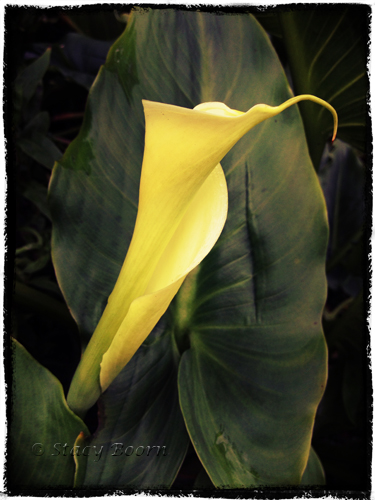
Feb 1 -Calla Lily 04 webWomen were not accorded respect, but she was consulted by and advised bishops, popes, and kings. She understood and documented the medicinal powers of nature for healing. She wrote treatises about natural history and medicinal uses of plants, animals, trees and stones. She is the first composer whose biography is known. She founded a vibrant convent  where her musical plays were performed.

For Hildegard the ultimate human sin was/is ecological – against the earth, the air, the water.  She believed that for injuring creations’ interdependent balance we are likely to destroy the earth and all humanity with her. In one of her meditations she wrote:

Feb 1 -Calla Lily 01 webThe earth is at the same time mother
she is mother of all that is natural,
     mother of all that is human.
She is the mother of all,
for contained in her
are the seeds of all.
The earth of humankind
contains all moistness
     all verdancy,
     all germinating power.
It is in so many ways  fruitful.
All creation comes from it,
Yet it forms not only the basic
raw material for humankind,
but also the substance of the
incarnational divine.


“Hildegard represents the big link between Christian spirituality and pre-patriarchal spiritualities.”  says Matthew Fox.   I contend that she is also the link between present-day patriarchal religious/political systems and the shift back/forward to post-patriarchalism that re-greens the future and redeems us all!  And like jewels each water drop is a precious sign of hope and healing.

Raindrops and Calla Lilies at Stow Lake, Golden Gate Park.


Posted in Weekly 2 | Tagged , , | Comments Off on February week 1 – Hildegard and the Greening Power

January week 5 – Seeing Red (and Pink)!

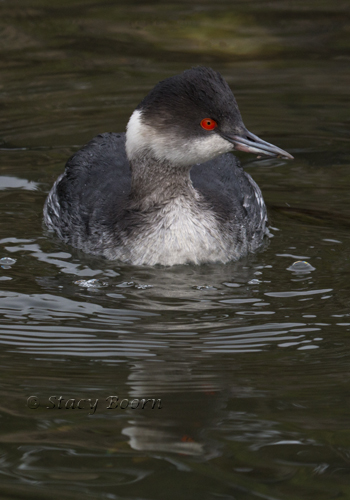
Jan 5 -EaredGrebe WEBIn the last post I suggested that you think of a color and then focus on it for the week. Sometimes the color just comes to me, and the fifth week of January was about seeing red.  Maybe it was the color lead-in to Chinese New Year’s, thinking of red for firecrackers and joy and those lovely envelopes that are given and received.

It is still the winter migratory bird season as various waterfowl continue to make their way up and down local coastal areas. The grebes and the coots have flirtatiously bright red eyes.  When photographing birds and other animals the key is to get the eyes in focus and try to photograph them at eye level.  Obviously this is a challenge unless you are able to wade into the water.  But sitting on a dock or beach is a good substitute for wading.

I am envious of the new Canon 200-400 mm lens with the built in 1.4 extender.  It isn’t as heavy as the 500 mm lens, and, in a pinch with well-lit scenes, I suspect it can be hand-held.  However, with a price tag over $11,000, it is way out of my price range.  What is Canon thinking????   So for those of us using a reasonably priced, yet good telephoto lens we just have to find those opportunities where the birds allow us closer viewing.  And on a good day we will see the reds of their eyes.

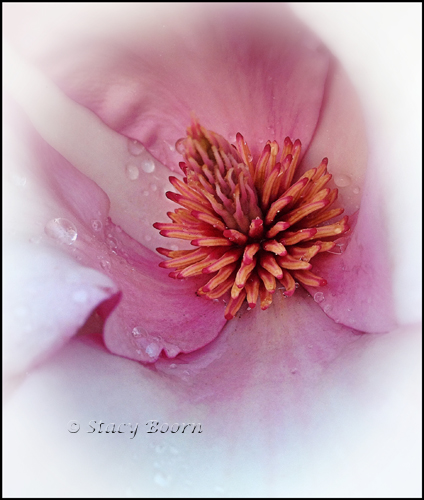
Right now another pink/white/red subject is the lovely stand of magnolia trees blooming in the Golden Gate Arboretum and scattered throughout the park.  Since we are not seeing many rainy and cloudy days, finding a location in open shade is a good way to acquire even light on the beautiful magnolia petals.

Jan 5 -Magnolia WEBThe unfolding magnolia blossoms resemble the Sufi dance of the whirling dervishes who often clothe themselves in flowing white robes and red conical headgear. Sufi dance essentially rotates about its own axis, and through this movement the dancers experience alternate states of consciousness and mystical ecstasy. Like the heart of the magnolia bloom, the Sufi soul seems to emerge from earthly ties to enter the realm of the divine.

Pink is one of the most common colors for magnolia blossoms. The shade of pink will vary from tree to tree. The flowers may be pale pink to bright fuchsia.  Pink blossoms are most commonly found growing on the saucer variety of the magnolia tree. Even more common than pink are white or cream-colored flowers. These flowers will range in color from pure, stark white to an almost yellow-toned cream. Like all other colors of magnolia blossoms, white and cream-colored blossoms are highly fragrant.

Let us dance with the magnolias and the whirling dervishes for global protection of the environment and for peace!

Posted in Weekly 2 | Tagged , , , , , | Comments Off on January week 5 – Seeing Red (and Pink)!

Wall Sized Wonder inspires Home Town Captures – Jan wk 4

David Hockney: A Bigger Exhibition, was on view at the deYoung Museum through January 20th.  Hockney, perhaps the most influential and best-known British artist of his generation, assembled this show exclusively for the deYoung.  More than 300 works were shown in 18,000 square feet of gallery space, making this the largest exhibition ever at the museum.

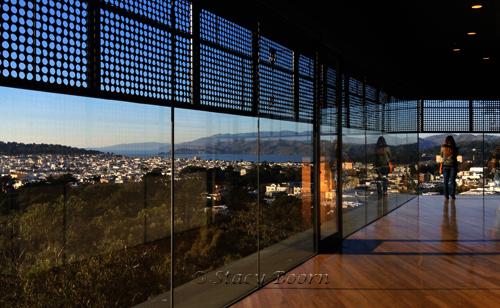
Jan 4 DeYoung WebMany of the paintings are vivid water colors of trees and simple, straightforward scenes of rolling hills in the countryside.  Portraits of Hockney’s friends and acquaintances filled a whole room at the museum and spilled over into other areas of the exhibition.  But my favorite part of the exhibition was seeing the awesome size of many of the images which are multiple canvases pieced together to make wall-sized presentations.

Hockney’s interpretation of Claude Lorrain’s, The Sermon on the Mount, is made up of 30 canvases reaching 24 feet across.  Many of the landscapes also use multiple canvases, often with branches and details not quite matching up.

Jan 4 PalaceFA webThe painting, Bigger Yosemite, consisted of five drawings created by Hockney on his iPad while the previous room was filled with charcoal drawings.  Then, much to my amusement, the observation deck on the Museum’s tower seemed like one more huge Hockney painting as the lines of the window panes and their shadows mirrored the exhibit I had just walked through.

But my absolute favorite room was the one where the paintings were all the same scene at different times of the year.  The paintings depicted what Hockney called “The Tunnel” – a simple country-side road vanishing through a row of trees sometimes green and other times naked.  Obviously Hockney returned over and over again to stand in the same spot to create new interpretations of a familiar haunt.  Although each painting was distinctively different you knew you were looking at exactly the same scene from the same vantage point.

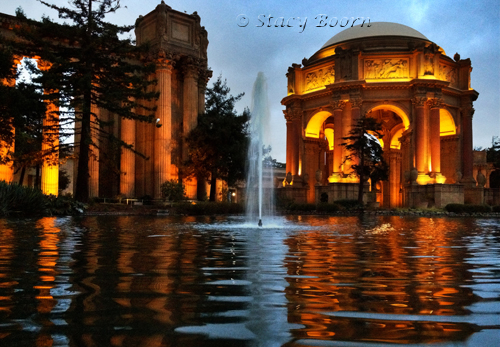
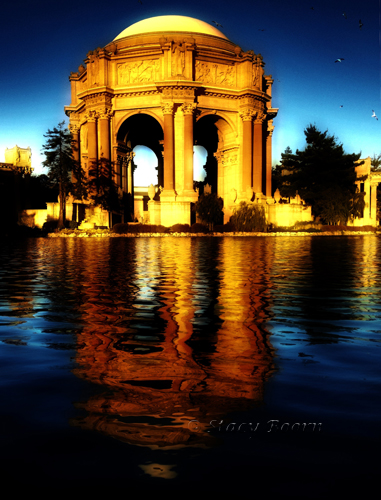
I love to photograph this way as well.  For instance, I return over and over again to the Palace of Fine arts to see how the moving water is reflecting the morning light upon the dome and pillars.  Although very different subjects, these images reminded me of my wonderful day at the deYoung.

Images and photographs are, after all, works that help us associate with something in our own experience.  You don’t have to have been to the exact locations to enter into them and through them travel your own journey.

Posted in Weekly 2 | Tagged , , , | Comments Off on Wall Sized Wonder inspires Home Town Captures – Jan wk 4

January weeks 1 – 3: Surf into the New Year

Jan 1 - SC Surfer1 webChris Powers, in Cool Waves, introduces us to the work of some of the best surfing images and their makers.  I can’t compete with them, unwilling as I am to jump into the water, but I still enjoy tracking and capturing the Santa Cruz wave riders.

The overlook by the lighthouse, now the Santa Cruz Surfing Museum, is an excellent vantage point to capture some pretty spectacular splashes.  A medium telephoto lens, 100 – 400 mm, may be hand-held on the sunny days.  Even though this is a sport I would not take up in ten life times, I am still fascinated by the surfers that catch the edge of a robust and tumbling wave as it unfolds in crashing fashion toward the rocky shoreline.

Jan 1 - SC Surfer 2Persistence, patience and practice are key attributes to cultivate for this kind of photography.  All-in-all, these disciplines can be applied to everything we are passionate about or engaged in.  A sport and the capture thereof, the earth and the vegetation it sprouts, cultures and the people that create them, and the lines and surfaces of decaying history are a few examples of the ying and yang I hope to engage and photograph in 2014.

Jan 2 -Train Detail webSome people make resolutions, write personal purpose statements or set goals.  I like to think in terms of imagery and color.  So instead of, or in addition to, choosing a word or goal each week I suggest you focus on an image and a particular dominant color.  And you can always return to my blog or portfolios for direction through an image or two.

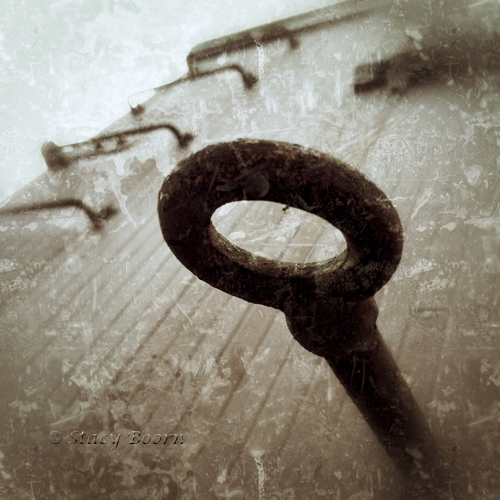
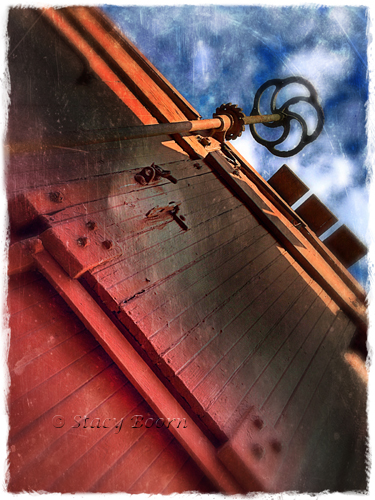
January Week Two was about close-up captures of surface textures and angles on a couple of train cars that hang out at Duncans Mill along the Russian River Road a few miles east of Jenner. For me, like for most people, old railroad cars reverberate with romantic vibes.  Getting in close and looking under and up helped frame these compositions.

Jan 2 - TrainCarSide webUnlike my surfing images these images were captured and processed on my iPhone.  I am still using an iPhone 4s and my favorite apps: Snapseed, Photo Toaster, PhotoForge2, and the Pro HDR Camera.

Diagonal lines are very powerful composition builders.  If the lines you are looking at are not on a diagonal, just tilt your camera.  Often people forget to do this.  Horizons scream, “Keep me straight,” but everything else is fair game.

Although my images are fun and whimsical this month they also carry for me a hopefulness that calls us to renew and reform ourselves for the sake of the earth and the justice that we must re-dream and reclaim for all peoples.

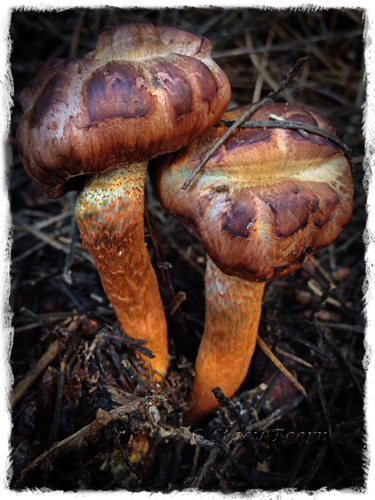
Jan 3 -Mushrooms Two webJanuary Week Three.  While the Midwest and East Coast are being hit with subzero temperatures and pounding blizzards, we in the bay area continue to enjoy unseasonably high temperatures and lots of sunshine.  But we know this is not good news.  Our area alone usually averages 25 inches of rain a year.  In 2013 there were only two downpours dropping a total of barely 5 inches.  So far this winter, our rainy season, has not produced a drop, and reservoirs are getting lower, and vegetation is shriveling.

After rainy winter days in past years I have scouted out several mushroom hotspots for photo forays.  These few images represent the full number of mushrooms I was able to fret out from under the thick, dry needle beds on Mt. Vision in Point Reyes National Seashore.  Normally you can spot Alice-in-Wonderland-sized Fly Amanitas by the dozens.

Jan 3 -MushroomMetalicwebMushroom hunting for culinary purposes or photography gets one close to the land.  This season the land seemed barren and wounded.  Mushroom photography, even if there is only one or two available, requires one to belly-up to the earth, literally, and smell and feel what you see/capture!  In pictures let us explore and pray for our Mother Earth in 2014.

Mushrooms are food for the body and soul – they grow literally everywhere.  They are like our blessings.

Even though I did not blog the last weeks of December, I did place my weekly two images in the 2013 Weekly 2 portfolio.  Enjoy.

Posted in Weekly 2 | Tagged , , , , , , | Comments Off on January weeks 1 – 3: Surf into the New Year

December week 1 – First Light Tribute to Creative Freedom

Lights on at  Dawn - Palace of Fine Art, SF

Lights on at Dawn – Palace of Fine Art, SF

The interplay between lines, curves and light is the basic ingredient for photography.  One of my favorite locations to work these elements into an engaging composition is San Francisco’s Palace of Fine Arts.  Dawn is a good time to begin walking this area while the buildings are still illuminated by lights and the sky begins to transform from pitch black to subtle hints of royal blue.

Winter sunrise light has a magical feel.  Trying to capture that emotion, I visit the Palace repeatedly.  First-light streams between the houses that line the streets perpendicular to the pond in the foreground, casting a warm glow on the migratory ducks that often gather there.  But it’s the dome that catches the first sun-rays which then work themselves down to the water’s edge.

Palace of Fine Art in First Light

Palace of Fine Art in First Light

The pastel orange and amber hues of the palace become blazing vivid colors at first light.  The scene is almost too saturated to photograph.  But knowing the cause of the saturation adds to its exuberant awakening.  Thirty minutes later the light will begin to flatten out.  Often this experience of first light is tempered by foggy mornings that can blanket the area in 50 shades of gray.

Depending on the amount of wind, you can capture on the water’s surface anything from a mirror image to a rippled resemblance of the edifice.   Both these and every variation in-between are worthy of immortalizing with an SLR or iPhone.  These intersections between nature (the light, the sky and the water) and human art forms are beautiful testimonies to the space we are called to share and create within.

Palace Details

Palace Details

Seeing ourselves as co-creators with the universe is awesome.  I believe from this perspective flows a greater appreciation of the earth and the gifts of her resources, and with that appreciation comes the daunting responsibility to respect and help safe-guard the beauty and the life that is around us.

Nelson Mandela led the struggle to replace the apartheid regime of South Africa with a multiracial democracy.  Imprisoned for 27 years, in 1994 he went on to become his country’s first black president.  The world will have a hard time finding the likes of Mandiba in the days ahead.  But seek and you shall find – birthers of rainbow-equality are all around us.  Perhaps we just need to stand in awe of their first light and move forward with their challenging and revolutionary images of freedom.

Posted in Weekly 2 | Tagged , , , | Comments Off on December week 1 – First Light Tribute to Creative Freedom

November week 2 – Are you for the birds?

Nov 2 - 2 Stilts web

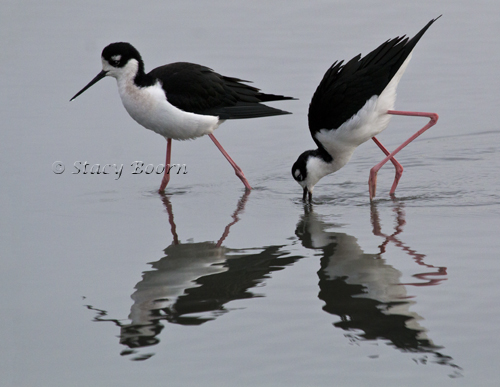
Black-necked Stilts – at Larkspur Bird Refuge

Bird photographers will often sit in blinds for hours or days and travel to faraway places where migratory birds gather by the thousands.  Their payoffs for such intentional hard work are prize winning images worthy of Audubon recognition.  Often they lug heavy and expensive equipment to their location.

But, with just a little bit of knowledge of your local bird activities and some patience, you too can have some fantastic bird imagery. The Bay Area is beginning to see many migratory birds coming into their favorite watering holes or final destinations.

Greater Yellowlegs - Summer in Alaska

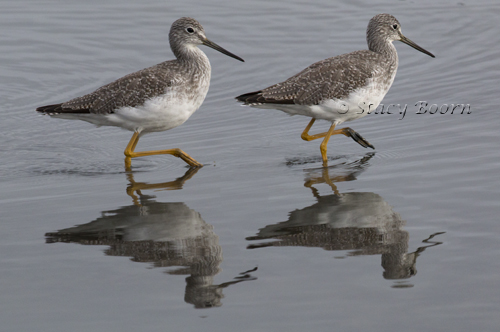
Having summered in Alaska – Greater Yellowlegs now at Larkspur.

I love our waterfowl and shorebirds because they are a little larger and accessible for medium telephoto-lens photography.  Also they often feed in shallow and still waters.  If you sit still in one place for a while sometimes they become accustomed to your presence and feed just a few yards away from you.

Two of my favorite local places to get fairly close to migratory birds are the lakes in Golden Gate Park and the waters of the Larkspur bird refuge just off of Highway 101.  The stilts and avocets as well as a variety of diving and dabbler ducks are making their way to Larkspur now.  When the waters are low you can see how long the legs are of the stilts and the avocets, and they make wonderful subjects for reflections.

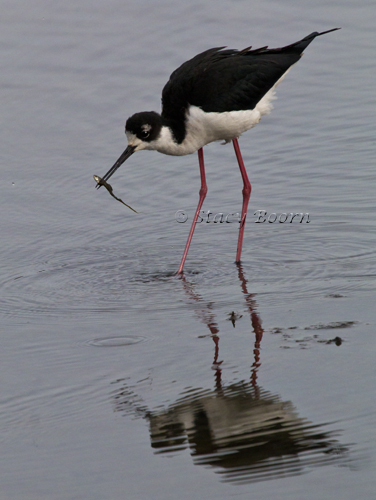
Black-necked Stilts have the second-longest legs in proportion to their bodies of any bird, exceeded only by flamingos.  They inhabit shallow wetlands from the western United States to Central America and parts of South America. Locally, Black-necked Stilts are found in salt ponds, flooded lowlands, or shallow lagoons.  They wade in shallow waters to capture their meals of aquatic invertebrates and fish.

Nov 2 - Stilt Fish webDaily delectable treats include craw-fish, brine flies, brine shrimp, beetles, and tadpoles. They peck, snatch, and plunge their heads into the water in pursuit of their food.  Along with the round and tiny Sanderlings, they work their beaks into the murky waters almost like rapidly-running sewing machine needles. They will also herd fish into shallow waters to trap them there.

The Greater Yellowlegs Sandpiper, a common long-legged shorebird found in freshwater ponds and tidal marshes, frequently announces its presence by its piercing alarm calls.  These birds feed on small aquatic and terrestrial invertebrates, small fish, frogs, and occasionally seeds and berries.  This week a half dozen greater yellowlegs were sharing the shoreline at the Larkspur bird refuge with the stilts, avocets, stints and several dabblers including pintails.

Although these birds and many others are searching among the identical food sources, they all peacefully occupy the same territory.  We humans often struggle with issues of occupancy rights.  So who is for the birds now?

Posted in Weekly 2 | Tagged , , , , , , | Comments Off on November week 2 – Are you for the birds?

Nov. Week 1 – The Art of Transitional Moments

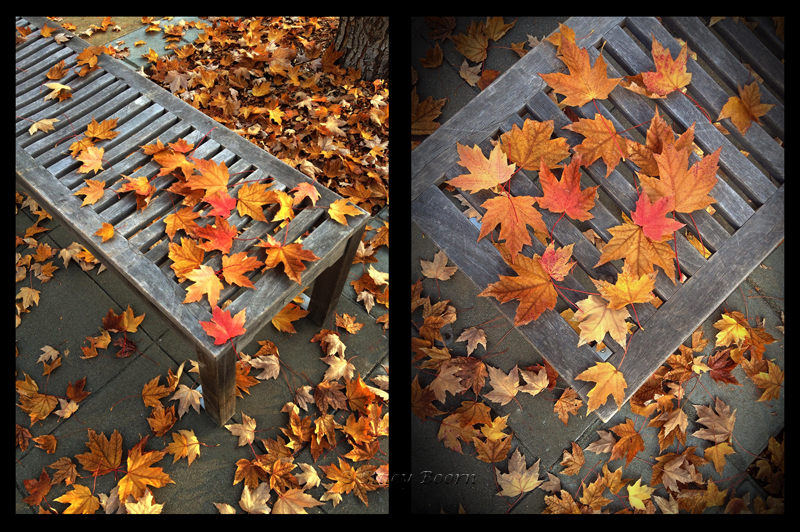
Nov 1 - Web Leaves 2I love to photograph leaves in the fall when they have freshly dropped from tree branches and vines, often blanketing the ground and creating patterns that Joseph’s Technicolor dream coat may have been fashioned after.

And I’ve grown to love the fall foliage here in the Bay Area.  It is a much gentler transition than my East Coast home where whole mountainsides are blazing red and orange with Maples interrupted by yellow patches of Birch.  Many times the simplicity of a single leaf tells its whole story without including every detail of how it got to its final resting spot.

In the first two images below, notice how the image on the left is basically a record shot: the bench, the fallen leaves, the sidewalk and a hint of the tree trunk.  The second image is more intentionally honed. The maple leaves on the bench are photographed from above.  I was hoping to get the perspective of what you might see if you were the branch from which these leaves were recently released.

The maple leaves on the bench are obviously larger than those on the ground, but you have to look twice to realize why that is so.  From this vantage point you cannot see the bench legs and don’t really know if the bench is flat on the side walk or floating above it.  Without seeing the tree you still have the feeling that it is there and naked!

Nov 1 - web Leaves BenchThe maple family is referred to as Acer, a word that has its roots in the Latin word meaning “sharp” due to the distinctive points of the maple leaf.  Maple trees are renowned not only for being featured on the Canadian flag, producing vast quantity of delicious maple syrup or making great guitars and baseball bats, but also for the appearance and quality that enables them to transition a landscape from one season to another.

Like nature, our lives are filled with many kinds of transitions.  Most people, myself included, dread transitions.  They often include hard emotional processes.  We can’t always see or even imagine the bright future that will eventually unfold.  Yet the fallen leaves are a sign that winter comes not as finality but as part of a cycle that will eventual lead to new births.

I offer these images as a prayer of hope for the people in the Philippines who have been thrust into tragic transitions by typhoon Haiyan.  With winds of over 200 miles per hour and torrential rains, it has caused massive destruction, loss of lives and forced millions of people to flee their homes.

Jack London State Park - Canon 70D using in camera HDR Capture

Jack London State Park – Canon 70D using in camera HDR Capture

Our help is needed to make a difference in affected areas.  Lutheran Disaster Response is responding to the most urgent needs of food, water, clothing, shelter, sleeping material and medicine.  Possible assistance will also include things like helping those whose livelihood of fishing or farming has been destroyed.

You may make checks out to Ebenezer Lutheran Church (herchurch), and we will send them on to Lutheran Disaster Response, or you may contribute directly to LDR online.  Gifts designated for “Pacific Typhoon Response” will be used in full – 100 percent – to help with immediate and long-term needs.  Your generous offerings of prayer and financial support will help those affected as they journey to recover from this season when not only the leaves, but the skies were falling.

Posted in Weekly 2 | Tagged , , , , , | Comments Off on Nov. Week 1 – The Art of Transitional Moments

October week 4 – Rediscovering Art on the Vine

It’s not exactly a pilgrimage or healing quest.  But every fall it seems I am driven by spirit to return to the vineyards. My favorite time is post harvesting.  In August and September the grape clusters disappear from the vines row by row, field by field.  By the end of October the harvest is finished.  The smell of the grape crush is already gone, replaced by the crisp fall air.

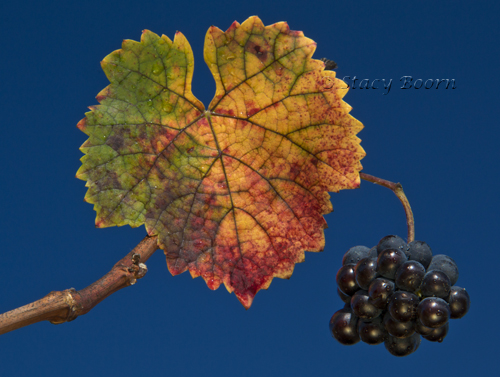
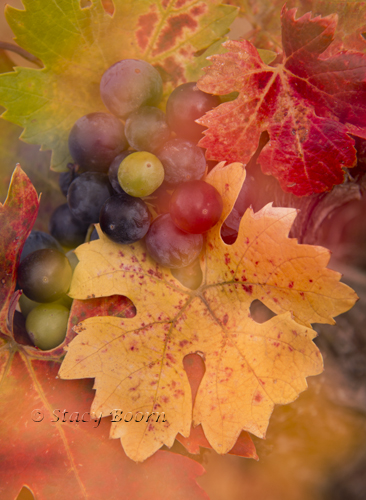
Oct 4 - Vineyard2 webAs the evenings become cooler, the flow of chlorophyll to the grape leaves is cut off, removing the green in their veins. The leaves themselves are now looking like harvest symbols, showcasing their previously hidden golden and rusty-red regalia.  Thankfully, there are always a few clumps of grapes that escape the harvesters’ knives.  They are the ones that become so picturesquely embraced by the multihued foliage.  It is true – the last are not necessarily the least!

Oct 4 - Grapes003 webEach fall I share with you my acronym

G. R. A. P. E. S. for creating stunning art on the vines.  G Is for getting in close. Fill your frame with your subject.  R is for reflection.  Use your gold or silver reflectors to bounce beautiful golden or cool light (silver reflector) onto your subject.  A is for aperture.  Wide open gives you a shallow depth-of-field which provides selective focus.  In contrast, F16 brings your entire subject and much of the background into focus.

P is for polarize.  Take that glare off your leaves and then shoot at a 90° angle or thereabouts to the sun — your sky will become a rich, deep blue.  E is for exposure – compensating for the dark, almost black color of the grapes in the fall. (Try some double or multiple exposures if you are able; you will see extra colors jumping off your subject.)  Last, but not least, S is for spritzing.  While the morning fog might leave a little moisture on your subject, you can also add the drama of water drops where you want it with your handy spray bottle.

Oct 4 -Grapes Double webAlthough not included in G.R.A.P.E.S., you will want to remember your tripod.  I even use it in bright light when a slow shutter speed is not required.  I want to fine-tune my compositions, and using a tripod slows me down and allows me time to consider where I wish to place my subject in the photograph.

You can use the acronym G.R.A.P.E.S for viewing life in general or the specifics that you see along the way.  Harvest time is a good time to get in close and see what it is we are truly thankful for.  We can reflect our own personal light back on our life to bring forth our gratitude…  and by all means let’s spritz the things and people around us with the joy that comes from deep within.

To see more examples of what can be photographed in the vineyards, please browse my portfolio on this website, “Art on the Vine.”

After a decade of photographing vineyard harvest details, you might want to tell me that it is time to find new fall subjects.  But each year I seem more determined than the year before to see the grapes from a new angle, in a different light, working toward a fresh composition that just might surprise both me and those who view my work!  Perhaps this is a pilgrimage or healing quest after all.

Posted in Weekly 2 | Tagged , , , , | Comments Off on October week 4 – Rediscovering Art on the Vine

October – Texture that Jumps Out and Grabs You!

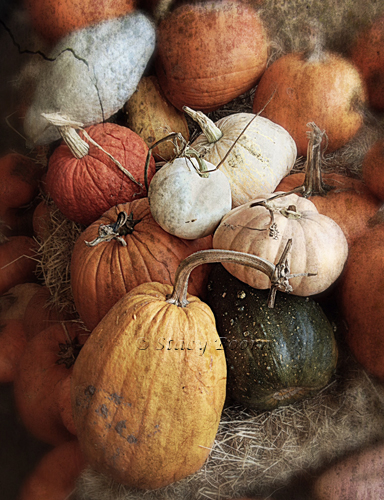
Oct 3 - Pumpkins WebPhotographing texture can help you look at bits and pieces of the world in different ways.  First of all, with our eyes we view the world in three dimensions but our photographic interpretations are pretty much flat.  So it is a challenge to visually represent “texture.”  But that doesn’t mean it can’t be done.

Texture is defined as the way a surface, substance or piece of cloth feels when you touch it.  The surface may, for example, be rough, smooth, hard or soft.  In addition, in my search of texture I also seek to make everyday articles beautiful and the bland profound.

As artists/photographers we not only strive to capture what we see but also how we experience what we see with both our eye and our “heart.”  Creating images of texture takes the challenge one step further: conveying to the viewer the sense of how the subject might actually feel to the touch.  A great texture shot can reach out and grab you.

Oct 1 - PastelFieldWebWhen the world news headlines scream “Disgusted” or “Disaster” or “Death” I often escape by creating tactile images to help me digest the despairing current events.  Rusting metal, pumpkin piles, and a tapestry of garden straw flowers were all at hand this past week.

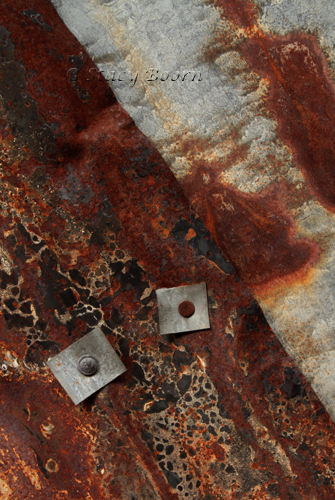
Oct 3 - RustDetailWebSmooth, rusty, tarnished and dull, metal easily gives up its age and provides the photographer with another great texture to work on.  The weather worked on the side of a shed like a painter methodically using her palette.  Soon to be demolished or forsaken, its panels surrendered to my abstracting imagination.  Through the lens I felt its tiny rough mountains and sprawling silver tributaries.

Fabric is a huge part of our daily life: clothes, furniture, carpeting, walls, car interiors, silk scarves, wool wraps and curtains, to name just a few.  In addition I love to photograph natural subjects but render them as impressionist tapestry.  The multiple (8 images) exposure is my cross between Monet’s lily ponds and my hand block-printed Indian sari.

Add a few crackled pumpkins and the world’s surfaces are looking and feeling a little more worth walking among.  Perhaps even with bare feet and an open heart/mind!

Posted in Weekly 2 | Tagged , , , , | Comments Off on October – Texture that Jumps Out and Grabs You!