September week 1

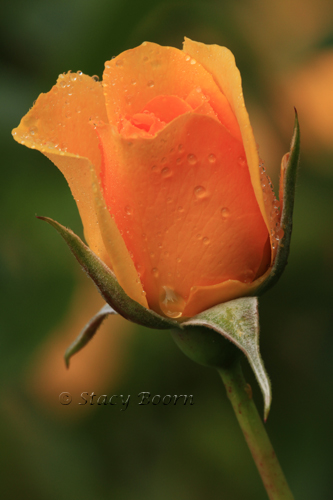
Since I knew I would be posting my weekly images on 9/11 I set out to photograph a rose.  The rose in many cultures is a sign of the Divine and used for love and remembrance.  All those things are important this day.  Since the mornings in San Francisco have still started out in fog the diffused light is perfect for flower portraits.

The rose season in Golden Gate Park is all but over, yet a few blooms continue.  The water drops from the fog (or the sprinklers) were beading up on the center petals of the yellow roses I stopped to smell.  When viewed up close they gave the impression of tear drops.  So I wanted to add a soft feel to bring out that emotion.

I started out taking full buds and roses and then moved in to capture the curves and texture of the petals.  I used a 100 mm lens at a wide open aperture (f/2.8) to render a very shallow depth of field.  Most of the petals quickly go out of focus.  The whole feel for me seemed to convey the words of a prayer I reviewed the day before, anticipating it’s use in a 9/11 remembrance at herchurch this morning.  It is a prayer for peace:

“Compassionate and merciful Divinity of many names,  Holy One, Allah, Yahweh, Wisdom-Sophia, Goddess, God of All, Providence,

We pause and remember in honor of 9/11 as we reflect on and work for peace. We gather with your people through the ages who have turned swords into plowshares that peace may be harvested.”

© Diann L. Neu, from Peace Liturgies, WATER, dneu@hers.com

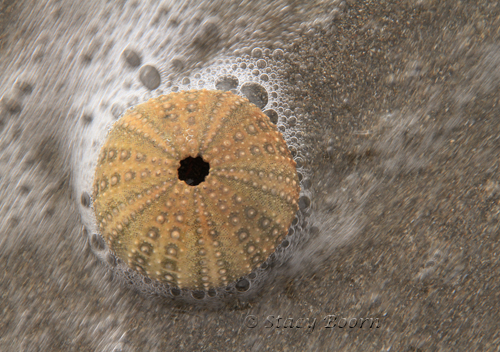
The second image I share with you is from the beach at Princeton by the Sea, just north of Half Moon Bay.  This is the area where the Maverick’s surfing competition takes place.  But when that’s not happening the people strolling on the beach are few and far between (before 9 AM that is).

I enjoyed watching the gentle incoming waves move shells and sea weed back and forth.  I was especially drawn to an empty sea urchin shell.  The incoming waves often left sea bubbles around the shell.  With a shutter speed of 1/45 you are able to convey the movement of the water (some blur) and still freeze the shell  which is slightly moved by the water.  In this case you want to take many shots because the water is moving quickly in and out of your composition.  Take a meter reading off the shell and sand and then manually dial in that setting, otherwise the white of the water’s foam will through your light meter reading off.  (Or take a few shots and check the histogram).


Posted in Weekly 2 | Comments Off on September week 1

August week 5

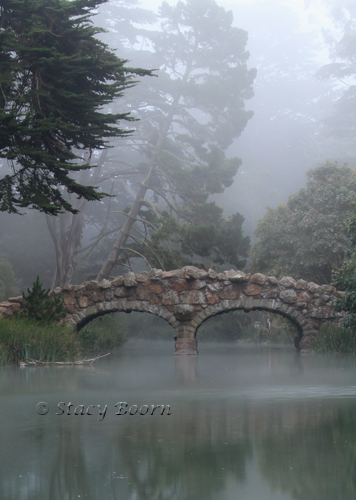
Although a created lake, Stow Lake in Golden Gate Park is a beautiful respite from the urban terrain.  The lake surrounds Strawberry Hill from which electrically pumped recycled water feeds a waterfall. Resident and migratory water fowl enjoy the lake as much as the joggers, walkers and visitors. Paddleboats and rowboats can be rented in the day and in the early evening on a calm foggy day you are walking in the mist of Avalon, or so it seems!

We have had a lot of fog along the coast this summer.  So instead of escaping it I tried to include it in my view finder.  Mounted on my tripod I photographed this image with my lens at about 85 mm, f/22 and a fairly slow shutter speed to capture a bit of the fog along the surface of the water.  The fog at tree level provides a nice sense of layers with little definition for the farthest trees.

If some last light sun could have found its way through the fog behind me the scene would have been a little warmer.  Since it didn’t I added a warming filter (on camera or in post processing) to help eliminate the blue cool cast.

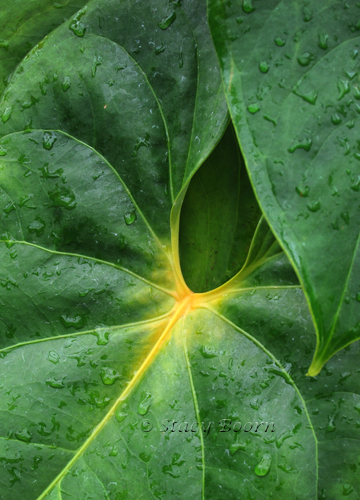
Earlier in the week I enjoyed the dew drops on leaves and flowers at Korbel Winery before it got too breezy (that’s why you get out early in the morning).  The plantings around the parking lot are always sporting color and attracting humming birds and butterflies.  Using a 100 mm macro lens I was able to get close enough to the leaf of a Nasturtium to include just a few drops.  The star like burst in the background is the out of focus vines of another leaf.  (Done intentionally).

If you don’t remember how much each f stop will give you at every lens millimeter use your depth of field preview button.  If you look closely you will see both the background leaf in the water drop and the reflection of a vehicle in the parking lot behind me.  This is one of the reasons I love photographing water drops in nature.  Like eyes they capture within them much more than we first realize.

The eyes of Mexico’s Our Lady of Guadalupe have in them  human figures discovered with an infrared photography process.  They are not mere chance of inkblots.  It is as if her eyes took a picture of the people before her.  The figures of a Bishop and a black woman have been identified.   I am reading a fascinating book on the subject and Lady:  “Our Lady of Guadalupe – Faith and Empowerment among Mexican-American Women” by Jeanette Rodriguez.

Dr. Rodriguez will be one of the keynote presenters at the November 11-13 Faith and Feminism, Womanist, Mujerista Conference at herchurch in San Francisco.  Check out the CONFERENCE details.

Posted in Weekly 2 | Comments Off on August week 5

August week 4

The Dahlia Garden next to the Conservatory of Flowers in Golden Gate Park peaks in beauty from mid July to mid September.  This area was dedicated in 1920 to the dahlia, the official San Francisco Flower.

Although there are a variety of conditions in which to photograph these beautiful and diverse flowers, I prefer a calm foggy day.  The colors really pop! (The sunshine will bring out the butterflies but it often gives you garish light and very bright hot spots in your background).

Most mornings you can meet the overseers who donate all of the tubers for their particular area. They sure are proud of their award winning gardening.  The California Dahlia Society helps us all get acquainted with the garden and the growing process as well as provides a variety of programs, shows and plethora of information to the public. Volunteers help plant, disbud, de-leaf, water, deadhead, and dig out approximately 500 clumps of dahlias.

The Dahlia originated in Mexico and was used by the Aztecs for medicine, religious ornamentation, and food for the animals (the tubers).  The genetic make up of the Dahlia has an uncanny ability to cross breed into many varieties. Some dahlias are as small as a quarter and some as large as beach balls.  There is even a Dahlia that looks like my morning hairdo.

You can use every technique and piece of camera equipment available to you when capturing the essence and emotion of the Dahlias.  I love working with individual blooms.  Most often I choose to photograph with a 400 mm lens.  I add an extension tube between my lens and camera so I can focus at a closer distance.

I want to provide enough depth of field to give detail to the petals (f/5.6 – f/11) but allow for the background blooms and leaves to be quite out of focus.  I look specifically for a light colored dahlia with a dark colored one in the background.  You have to work at positioning your camera and tripod so that a specific colored back ground dahlia falls in the right place.

Using a close up lens you can isolate a detail or portion of a bloom that creates a creative composition. This is when you hope for no breeze so you can use small apertures (f/22 – f/32) to optimize depth of field. Most macro lenses will allow you to get life-sized images.  Using a 100, 180, 200mm close up lens keeps you from having to be right on top of your subject.  This is especially helpful if your subject is a bug or butterfly on your dahlia.

Although the growers don’t like the drizzly days because the water spots the dahlia petals (etc), we photographers appreciate the natural water drops.  The Dahlias are stunning right now.  But if you can’t get to the SF Golden Gate Dahlia Garden today, you have several weeks left…when there will still be many blooms.

Posted in Weekly 2 | Leave a comment

August – week 3

The fog continues to blanket most of San Francisco even to the point of drizzling. But this produces wonderful dew drops on leaves and flowers.  I find that diagonal lines in an image can give a simple stagnate subject a sense of movement.  Such was the case with these beautiful green leaves.  Over cast days defuse the sun and pop the colors.  That helped make the yellow color attractive in the veins of the mid section of this image.

Green is so “full of life” and a wonderful symbol in these days where the news reminds us of the ever widening death blows we have created globally.  May the greening power of the Holy One give us the insight to repair the web of life while there is still time.  The green of this plant seemed to be crying out for eco-justice.

Fill your frame with your subject is a mantra I learned years ago from Photographer Carol Leigh.  Sometimes I still say it out loud when determining a composition. (see Carol’s website: Photoexplorations.  She has a wonderful daily blog and offers top notch online classes and photo trips!)

The second shot is a section of a rusting old shell gasoline pump, probably from the 1940s.  Within every inch of rusting tractors, cars, and gas pumps you can create abstract images.  This time I chose a recognizable section of the pump to draw us back into its historical setting.

This old gas pump with other funky items is found just south of Half Moon Bay on Highway 1 at the Cameron Pub and Inn, (1410 S. Cabrillo Hwy).  The inn has self identified as the Disneyland of pubs.  Although, that may not speak well for all the other pubs but the photo ops for rusting bits and pieces is worth the stop.

Posted in Weekly 2 | Leave a comment

August week 2

The images for this past week both come from Lake Tahoe.  Lake Tahoe is the highest lake of its size in the United States and the largest alpine lake in North America, and I am fortunate that it is only a 4 hour drive to reach some of its south shores.

In the summer the sunrise is pretty early so you want to be looking at Emerald Bay by 5:30 AM to see if the dawn colors will amount to much.  Some clouds would have made this image stunning in places where the pre-sunrise colors would bounce back onto the scene.  But I settled for the subtle orange that was present.

Since Lake Tahoe itself is so large the view of this beautiful bay gives you more opportunity for calm water. Lake Tahoe has 72 miles of shoreline, although not all visible or accessible from the route around the lake.  It is 22 miles long and 12 miles wide.  “The water is so clear that a 10 inch white dinner plate would be visible at 78 feet below the surface.” (Visitor’s Bureau)

Because the snow melt in the Sierra Mountains around Tahoe was so late this year there are still plenty of wildflowers at 6,000 feet and above.  Some you can drive right up to as in the case of this wonderful unfolding Mariposa Lily which you can find at in the great Basin at low, mid and high elevation (below timberline).  When the three rounded petals open you see black or maroon chevrons above the nectar glands.

I used my 18 – 200 mm lens mounted on my tripod (of course) and then used a diffuser between the bright sun and my subject and background to make the light more even.  Also I added a little light which bounced off my silver diffuser.  I never use the gold side of the diffuser with a white flower because it makes it too “yellow.”

Take a look at the Tahoe Outdoor Recreational GUIDE for some location ideas!

Posted in Weekly 2 | Comments Off on August week 2

August – week 1

We have fog every day in my part of San Francisco.  This can be nice light for various subjects, especially wildflowers and people portraits.  Obviously you know my first choice will always be the wildflowers.  They don’t talk back!  But they do blow in the wind.

The Coastal Paintbrush is pretty prolific on the beach sand dunes in San Francisco, San Mateo, Santa Cruz and Monterey counties right now.  They are often  tricky flowers to photograph because their petals are “furry/fuzzy” and that gives the appearance in your image that the flower might be on the soft side (slightly out of focus). There are some accessible ones from the parking lot at Land’s End above the Cliff House restaurant here in SF.

I chose a shallow depth of field that adds to the “soft feel.”  This way the surrounding paintbrushes go out of focus quickly rendering them merely splashes of color.  Depth-of-field is the amount of focus you have in your image.  You achieve this by choosing your aperture.  The smaller the aperture (opening) in your lens the greater the depth of field you can achieve.

So if you are looking for a lot of depth-of-field (DOF) you might choose f/16, f/22 or even f/40 (if you have it).  When using a macro or close up lens, in essence, you have a much shallower DOF.  The distance from one petal to another may only be a fraction of an inch but you will need a small (seems like a larger number, but that is because it is a fraction) aperture to achieve the depth-of-field needed to keep the petals in focus.

Then watch your background, because as you start to pull that into focus it could be competing with your subject.  So with these paintbrushes I choose to get only a small portion of the flower in focus.  If you are using a macros lens try focusing on a particular part of a petal and shoot at f/2.8 or f/4 and notice (depth-of-field preview button) how every thing else will go out of focus that it is almost just fluffy shapes of color.  Avoid white splashes.  They are simply too bright and that is all your eye will look at!

My lens of choice was a 100-400 mm at 400 mm with an extension tube.  This helps narrow the background and add to the shallow depth-of-field. My lens has a collar on it that attaches to my tripod head so I can move from horizontal to vertical very easily.  Photograph these flowers from a low position – if they were squirrels on the ground you would get down at eye level.  So petal level as you will!

I found a wonderful Indian Paintbrush poem by Ruth Obee  (so go to her website and check it out).

     Long ago in the West, the Great Spirit
      took the weft of the evening sunset 
      and mixed it with the hematite red
      of a rusted old butte, flint-lapped
      by erosion and time, to color an Indian paintbrush
      like a sun-fired plume,
      blooming from May to September,
      an eternal flame, a memorial,
      to the blue-sky loving Ute, who were death-marched
      like Old Testament tribes from their shining
      Rocky Mountain home – exiled
      to the deserts of Utah.
Posted in Weekly 2 | Comments Off on August – week 1

July – Week 4

One of the wonderful things about living in San Francisco is that in a matter of hours you can be combing the beaches north or south, driving through desert, traversing the valley or hiking in the mountains.  This past week I took a couple of days off and with AWE Gallery photographers Chris and Deborah headed for the mountains, specifically Lassen Volcanic National Park.

Lassen Peak reflected in Hat Lake

“The park is located near the northern end of Sacramento Valley. The western part of the park features great lava pinnacles (huge mountains created by lava flows), jagged craters, and steaming sulphur vents. It is cut by glaciated canyons and is dotted and threaded by lakes and rushing clear streams.” Wekipedia


Snow Plant

After leaving at 4 AM we arrived at the Northwest entrance at Manzanita Lake. This part of the park was in full summer with just a few snow plants still showing, water lilies blooming and dragon flies at the edge of Reflection Lake.  I have not been to this location before and had no idea that half way into the park nearing Lassen Peak that the snow banks on the sides of the road would still be eight feet high.  The real contrast was hiking on several feet of snow packed trails and having sun warm the day to nearly 80 degrees.

The two types of images I wanted to concentrate on were expansive landscapes and wild flowers!  Obviously this was the place for both.  You can easily find places where Lassen Peak and other

Water Lily Pond is near Reflection Lake

snow-capped mountain ridges are reflected in lakes and streams. My choice of the reflection at Hat Lake at 7:30 AM positions the reflection where the streams meet – thus not a classical mirror image.  This lake is becoming a meadow.

This area became a National Park in 1916 after three years of eruptions and volcanic activity.  Now over 350,000 people visit every year.  You can see much of diverse landscape and intimate details of the park via auto tour and the many overlooks.  But it is worth choosing a couple of hikes.

For a wonderful stroll you will want to ramble around Reflection Lake. Here many different kinds of pine trees are identified for you.  The best time is in the early evening when the early evening light is on Lassen Peak and the trees and their reflection in the lake.  We did this the second day after our hike into Bumpass Hell.  So the level ground walk was a welcome relief as well as the ice cream at the Manzanita Camp Ground store!
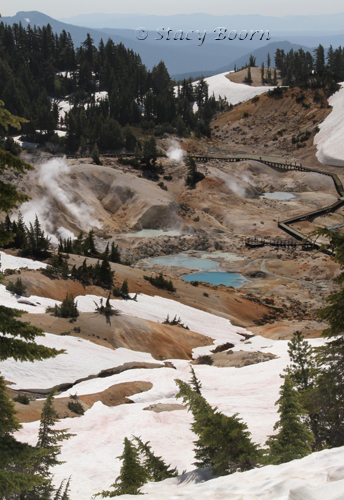
Bumpass Hell hydrothermal basin

The Bumpass Hell trail was 80 percent under snow and made the trekking a little slippery and reason for moving slowly (not to mention the elevation of 7,000 feet or so).  The grand vistas from this trail are breath taking. Despite the fact a sign said “treacherous conditions trail not recommended” the rangers reported the trail was open you just needed to follow the foot steps through the snow.  After 300 feet of elevation drop the reward at 1.5 miles of the trek in is the hyprothermal basin where you view boiling and bubbling mud pots and fumaroles.

What you need to pay close attention to in this location is your exposure.  If you are photographing a lot of snow or your meter is reading the light on snow you need to over expose 1 to 2 stops otherwise your snow will be a “medium gray.”  And I don’t mean the dirt will be showing through.  But pay attention to the metering mode you choose.  I like center weighted or spot metering.  But if you compose one picture with snow in your metering zone and another with the dark green trees you will have to compensate appropriately!

Mule Ears on Mill Creek Trail

The Bumpass Hell hike (dedicated as a moderate trail) seemed pretty tame compared to the hike into Mill Creek Falls which is 3.6 miles round trip and at a slightly lower elevation (therefore the snow was gone).  The temperature was nearly 90 when we finished.  The first 20 minutes of the trail was my favorite as we wandered through hillsides of blooming yellow mule’s ears.  This was a wide angle paradise (except for the up and down hill part, that for me was $%^$#* – a few pounds lighter might help!)

This time of year the wild flowers are abundant and easily found along the roadsides and at short walking distances from the parking areas.  If I return to this area I would choose to stay in the new cabins at Manzanita Lake (here too is a good reflection location). So enjoy these few extra images I share with you for the 4th week of July.   This images remind me of the lyrics of Jann Aldredge-Clanton’s hymn (from Inclusive Hymns for Liberating Christians):
New miracles unfold
At dawn of every day,
Fresh beauty to behold
With Sun’s first shining ray.
Awake and see, awake and see
the whole world bloom with wonders free.
     Words:  Jann Aldredge-Clanton
     Music:  John Darwell
 

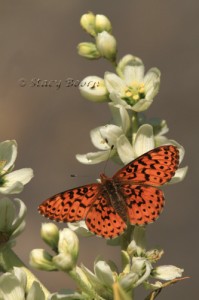
The Corn Lily was home and host to a wonderful butterfly.  Using a 100 – 400 mm lens with and extension tube made this image possible and helped narrow the background.  At f/11 the background rock lost all detail making for pleasant  and peace full image capturing yet one more unfolding miracle before me!
Posted in Weekly 2 | Leave a comment

July week 3

I often find that making or reviewing images, especially of nature subjects, provides me with a visual prayer invoking the healing spirit of the Divine.  At this moment I am mindful of the healing needed for the recent tragic killings in Norway and the starving children in Somalia.  May these images be a visual chant:

  • ”I will be gentle with myself,
  • I will heal myself,
  • I am a child of the universe,
  • held in love each day.”

Circle of Song, Complied by Kate Marks.  Page 201.

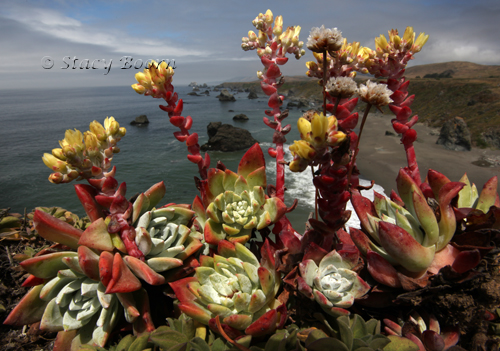
A trip to the Sonoma coast provided me some opportunities to go wide.  Using a Canon full frame sensor DSLR and a 17mm lens I took advantage of the maximum hyper-focal distance.   Depth of field is everything in focus from one point to another in your scene/image.  The hyper-focal distance is the point of focus where everything from half a given distance to infinity is in focus.

By using or memorizing a hyper-focal chart you will know how much depth of field you can get with any given focal length lens at any particular f/stop.  I have committed a few hyper-focal distances such as setting my 17mm lens at 1.6 feet at f/22.  This means everything from halfway between 1.6 feet and infinity will be in focus.  For this image I just moved into my subject until I was about 10 inches away and then composed and captured the picture (ten inches from the sensor plane).

Spring is the best time for seascapes with dynamic foreground because the wildflowers are plentiful.  But there is some summer color and blooms available right now like this succulent.  There are many picturesque pullovers along Highway 1 from Bodega to Jenner (and beyond, of course).  You often want to captures the coastline in late afternoon sun, near the golden light of sunset.  But a wide angle shot sometimes works very well around noon.  You won’t have to worry about getting your own shadow or the shadow of your lens in your image.

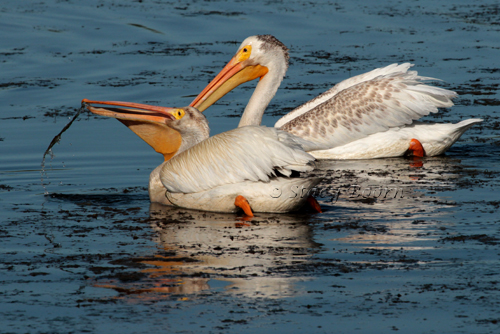
White pelicans can be found in large coast lagoons and bays like the ones at Larkspur Landing Marsh Bird Refuge.  Usually arriving in this location in August there is about twenty there now.  They often swim together herding schools of fish into one area and then dipping their beaks into the water to scoop up their dinner.

These two White Pelicans had broken off from the larger group and fished together.  This is early evening, about an hour and a half before sunset and the light began to be more intense which pumped up the colors in the scene. The low light was behind me and hitting directly on my subject. This direction of the light produces a nice catch light in the eyes of the birds.

We are connected to all that is….children of the universe!

Posted in Uncategorized | Comments Off on July week 3

July – Week 2

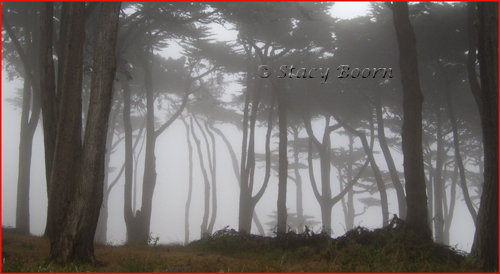
All last week the San Francisco Bay was covered in its typical summer dress – fog and drizzle.  While much of the Midwest and East Coast sweltered we were chilly.  When the fog is low it often swirls around the trees, Golden Gate Bridge and buildings alike.

A wonderful place to see the layer look of the tress and fog is near the old Sutro Baths and Land’s End.  The Cypress trees have been thinned out here so they are not extremely dense.  Usually a gray sky makes for a very dull image, but when the grey is fog coming all the way to the ground it can give the trees an ethereal look. Also the low fog provides a real sense of depth and layers.

The trick is to make sure there are enough trunks that aren’t merging with others to provide separation which provides the viewer the opportunity to make her/his way from the front of the forest to the farthest tree line.  Each time I see fog like this I think of the following two familiar quotes.

The coldest winter I ever saw was the summer I spent in San Francisco.”
This quote has been attributed to Mark Twain.

The fog creeps in on little cat feet.
It sits on silent haunches,
Looking over harbor and city,
And then moves on.  – Carl Sanburg

This past week Brown Pelicans were “punch diving” at Moss Landing for the sardines that were passing through.  This bird is distinguished from the American White Pelican by its brown body and its habit of diving for fish from the air, as opposed to co-operative fishing from the surface.

I enjoyed standing on the bank as they flew by slightly below me availing a view from “above.”  Tracking birds and animals takes some practice, so I am grateful to digital that allows us to capture many images attempting to get one right on.  Obviously a very fast shutter speed (1/800th of a second or fast) is needed here!

Posted in Uncategorized | Comments Off on July – Week 2

July – Week 1

There is a Jewish chant that I often find myself singing.  It has been used in the Sunday Divine Liturgy at herchurch during advent.

“Return again, return again, return to the home of your soul.

Return to who you are, return to what you are,

return to where you are, born and reborn again.”

There is something comforting and even enchanting about returning to some place, someone or something familiar.  I of course find this true when I go back to the water’s edge, where the Pacific Ocean kisses the California coast.

This past week I returned again to the low tide sands of Pescadero State Beach.  Even though it is a familiar place I constantly find something new to photograph.  On the morning of the 4th of July at 7:00 AM the beach was still people-less.

The pebbles and stones at the water’s edge were being covered with sea foam. When dead and crushed plankton is pushed ashore it creates foam and bubbles when the ocean moves in and out over low tide pools.  The organic material in the plankton is responsible for the iridescent colors.

I thought the turban snail in the colorful sea foam bubbles made a wonderful composition and provides scale to the bubbles.  The turban snail here is about the size of the diameter of a quarter. Using a 28-135 mm lens I was able to get close enough for this capture.  I use a tripod 95 percent of the time even in situations with lots of light.  The tripod helps me take time to frame the image.  But I was standing in the incoming water for this image so I went to hand holding.  Some of the images with just the bubbles alone were interesting as well as using them in the foreground of a very wide angle shot.

The second image I am sharing from the first week in July is from the small “country” cemetery in the town of Pescadero. I love walking through cemeteries to see how people remember or neglect their ancestors and loved ones.  There was a particular area where four babies were buried next to each other.  In somber contemplation I stood beside them momentarily mourning for all the children’s lives that are extinguished before their intended future.

A small angle statue in a cement base caught my eye, especially as a dandelion grew beneath it.  Two things I never cared much for, death and dandelions, were now the focus of my attention.  I couldn’t quite get the selected focus I wanted for this image so I blurred the background a little in post processing using Gaussian Blur in Photoshop CS2 (yes I know I have to catch up to Photoshop 5 soon).

Aren’t the angel’s pink lips just adorable?  The following poem with its citation below captured the essence of my seeing.

Statue

By Tom Clark

The angel asked, as his shoulders were pressed into the stone
Why me? And taken away from the inhabited body,
Like the lyric voice rustling from memory forests,
Childhood rushes toward death, a wind in those woods,
Crashing through trees, dying out,
Settling like a white mist over everything.
Posted in Weekly 2 | Comments Off on July – Week 1