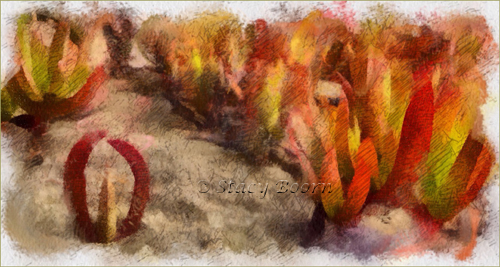
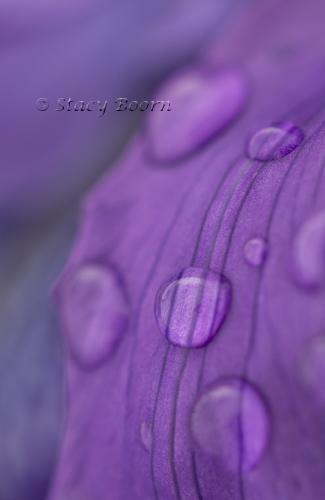
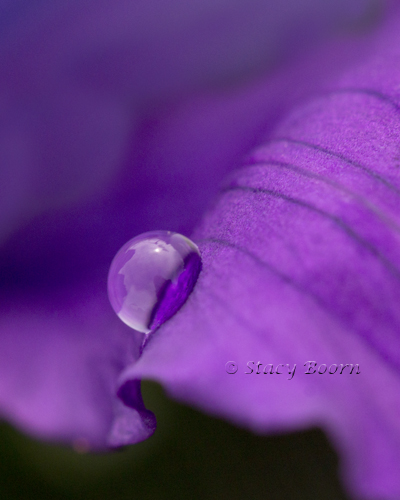
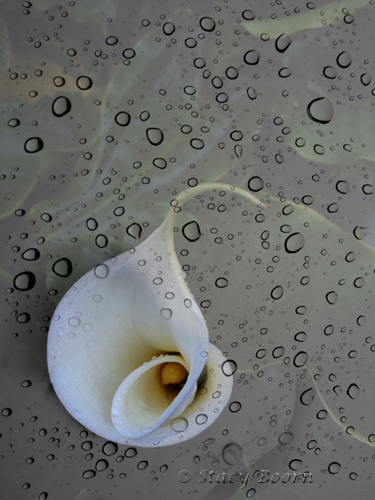
Raindrops on Douglas Iris
When I was eight years old I loved to sing songs I learned at church. One of my favorites was a newly published hymn, “Joy is Like the Rain.†It was written by a Medical Mission Sister. I sang her words with passion, “I saw raindrops on my window, Joy is like the rain. Laughter runs across my pain, slips away and comes again. Joy is like the rain.â€
Who would have guessed that many years later the author and composer of that song would become one of my most admired feminist theologians? In addition to the “Our Mother†that we use in our worship at Ebenezer/herchurch, Miriam Therese Winter has produced volumes of feminist re-imaged biblical stories, women psalms, and liturgical material as well as hymnals and 13 music albums. They are like water wells for parched hearts and droplets of wisdom in barren times. Her words and images are some of my favorite things, and they refresh my soul.
My other favorite childhood song was first sung by Julie Andrews, as Sister Maria, to all the Van Trap children in that copious bed during a frightening thunderstorm — “Yes, these are a few of my favorite things: raindrops on windows and warm woolen mittens…â€
 It may not be the best psychology when we need specific or long-term therapy, but often our favorite things, favorite places, and favorite people can shape and re-mold us into moments of joy. I am a person whose temperament is often reflective of the weather, the seasons and the sway of the cosmos. Even though I know how important our recent down-pouring rain is to our four year drought, I was ready for another of my favorite joy-evoking things – a day of sunshine.
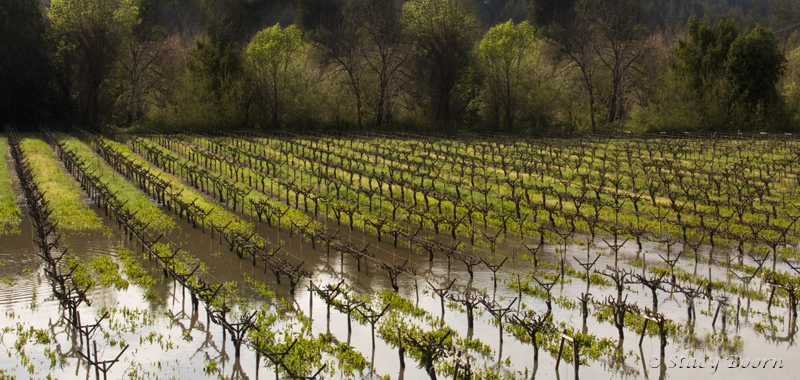
As I enjoyed the first day of sun after many days of rain, the water in pools and puddles still graced the land like raindrops of love and grace. In the midst of my photography I am sure I sang out loud, “I saw raindrops on the river, Joy is like the rain. Bit by bit the river grows, till all at once it overflows. Joy is like the rain.â€
Written in 1965 “Joy is like the Rain,†became the signature song of the Medical Mission Sisters’ ministry of music and was embraced by inter-faith traditions and many cultures around the world. Mariam Therese Winter says of this song, “It was simply a heart’s credo under excruciating stress, a covenant with One Who, unknown to me then, was leading me along a path I never would have chosen but have wholeheartedly embraced. I smile
 every time I sing it or hear it, for I know, and God/dess knows, that this song was sung to life at a point when I felt no joy within me, yet it circled back to me with more joy, more love than any one lifetime can hold. It was my song of faith and trust once, and it still is.â€
 May your song of faith and trust fall down like the rain and flood your heart with grace and love.
Songlines. Hymns, Songs, Rounds and Refrains for Prayer and Praise, by Miriam Therese Winter, Medical Mission Sisters. Spanning the past half of a century, these songs are still as fresh as raindrops on the first spring wildflowers!
Images:Â Raindrops on Douglas Iris, Pt. Reyes (shallow depth of field – f/2.8), Korbel Vineyard along the Russian River, Calf with a moist nose – Pt. Reyes.
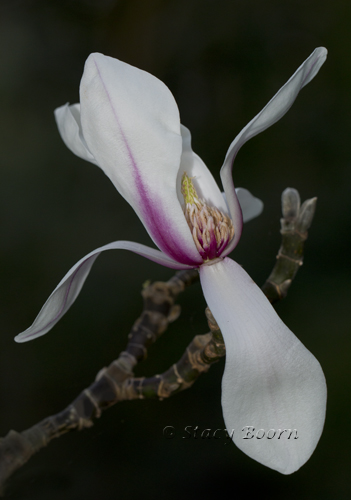
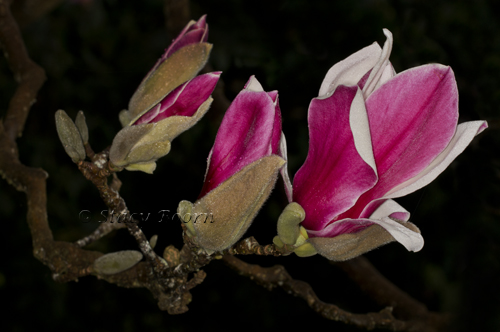 The unfolding magnolia blossoms resemble the Sufi dance of the whirling dervishes who often clothe themselves in flowing white robes and red conical headgear. Sufi dance essentially rotates about its own axis, and through this movement the dancers experience alternate states of consciousness and mystical ecstasy. Like the heart of the magnolia bloom, the Sufi soul seems to emerge from earthly ties to enter the realm of the divine.
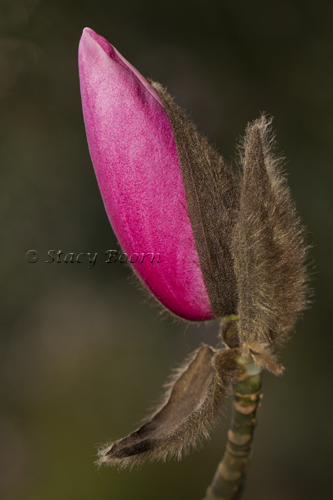 Pink is one of the common colors for magnolia blossoms. The shade of pink will vary from tree to tree – the flowers may be pale pink to bright fuchsia. But even more common than pink are white or cream-colored flowers. These flowers will range in color from pure, stark white to an almost yellow-toned cream. Like all magnolia blossoms, white and cream-colored blossoms are highly fragrant.
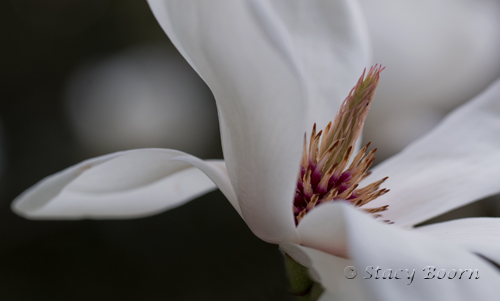 As we walk among the magnificent magnolias or through the tent camps of the homeless we enter the realm of the divine. Therein let us pray for strength for the journey and healing for the Web of Life.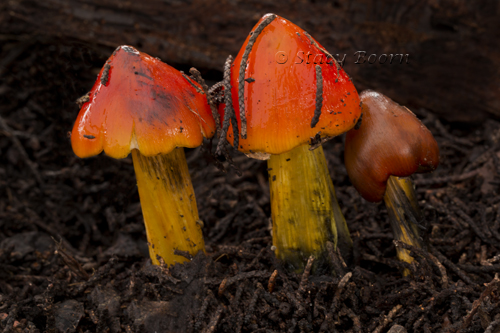
 In this case “pushy” is a very admirable and necessary trait for survival. Just like women, they need to take charge and be tough. But article after article reminds us that our society, embedded in patriarchal practices, thinks women are too pushy when they assert themselves, but, on the other hand, they are seen as wimpy and weak if they are too quiet.
 I’m not a big birder. “Ornithology,” the study of birds, takes a lot of dedication, time and education. And there are some species where even the experts will hedge. Those who are able to identify birds and understand their habitats deserve great admiration. Probably no one can name them all. I consider myself a bird notice-er.
 The fact that some of these ducks are divers and some are dabblers became the first tag of distinction I noticed. My encounters with the birds has helped me realize that being a “notice-er†can make an immense difference in how one experiences life. It draws you closer and makes you more appreciative of the particularity of the creatures, beings or elements with which you are in physical proximity.
 The ancients chose bird images among the personas they gave to the Goddess. For instance, most birds take flight and seem to be free and unencumbered by the rules of others. Then, too, the mother bird was known to warmly care for the chicks and do anything, including offer up its own body, for their welfare. These metaphors continued even into Judeo-Christian imagery where God was thought of as a mother eagle (dynamic empowerment) and a mother hen (intimate cuddling). Also, Christ was depicted as a female pelican in art and literature.
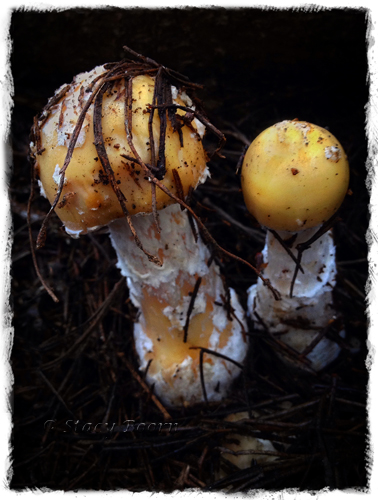
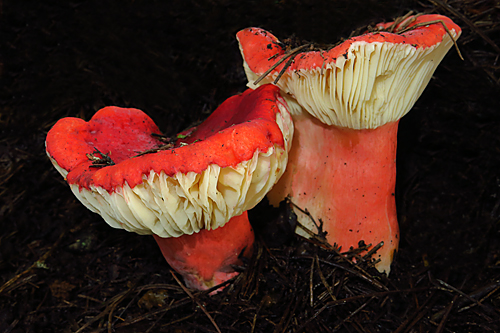
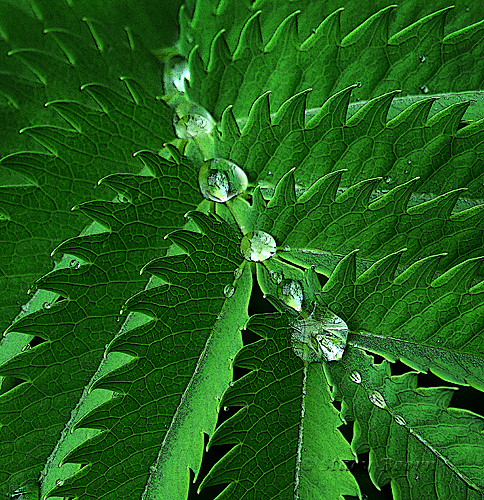 This week I dedicate my images to Greenpeace and its efforts on behalf of a future that will allow our forests to thrive. Thriving forests translate into a thriving world where forests sustain local communities and economies, are filled with unique wildlife, and keep our air clean and pollution-free.
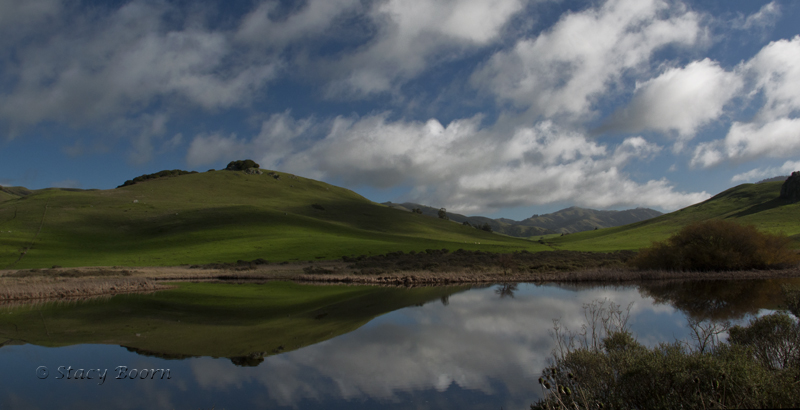 Forests are home to an incredible diversity of green – in plant and animal life. But these life-giving habitats are under threat from deforestation. Deforestation has devastating impacts for the indigenous peoples and forest-dependent communities that have traditionally stewarded these lands. Beyond the borders of the forest, we all rely on forests for things like clean water and air, timber, medicines, and the products we use every day.

 A few days ago I sat with a group of 20 women. We were asked to share a word that might guide us into and through 2016. Most of the words were encompassing concepts like limitlessness, hopefulness, pain, growth, relationship-building, economic stability and adventure.
 Mother of the Mountains, Mother of the Waters,