May week 3 – Butterflies and Blooms

Long are their flights and short are their lives!  Butterflies.

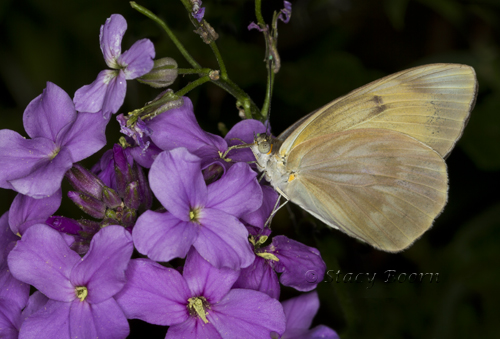
May 3 - Monarch webThe Butterflies and Blooms Exhibit at the Conservatory of Flowers in Golden Gate Park has returned.  You can get close enough to the butterflies to look directly in their eyes. There are more than 20 species of Northern American Butterflies flitting around this gallery.

The wide variety of brightly colored daisies, sunflowers, zinnias make wonderful backgrounds as the many butterflies and moths dart from one flower to another.  Most easily recognized in the group is the monarch.

Be prepared for humidity and heat.  Your DSLR lens will probably fog for the first five minutes as it adjusts to the climate.  But a micro fiber cloth will help you defog your lens.

May 3 - ButterFly 01 webThe Conservatory of Flowers is open 10 AM – 4:30 PM Tuesday – Sunday.  I found that entering at 3:30 was a good time.  The school groups come in the morning and it seems that the butterflies themselves are a little lethargic by afternoon.

Although I was using my Canon 7D, macro lens and ring-light-flash, I noticed my competition used iPhones and seemed to get fantastic results. However you capture or view the beauty, colors, and shapes of butterflies may they be your guide into this week’s spiritual journey.

Posted in Uncategorized, Weekly 2 | Tagged , , , , | Comments Off on May week 3 – Butterflies and Blooms

May Week 2 – Happy Mothers Day with bugs and buds!

May 2 - NorthBeach webMalika Saada Saar is the Director of the Human Rights Project for Girls and a co-founder of the Rebecca Project for Human Rights, an organization that advocates for dignity, justice and reform for vulnerable families.  Makers.com recorded her Mothers Day quote. “Because of these two women (mother and grandmother) I was able to be loved into a place of knowing myself and having an unbreakable confidence.”

On Mothers Day we tend to reminisce and recall things that we learned from our mothers, grandmothers and others who mothered us.  I recall how my mother once told me to “fill your heart with love.” So general and simple yet it remains dear and profound to me.

This day we also recall the roots of Mothers Day.  When Julia Ward Howe’s poem, the “Battle Hymn of the Republic,” was published in 1861, it brought her instant celebrity, and the song made her one of the most famous women in 19th century America. But 1870 was more important to her when she penned the original Mothers Day proclamation calling upon all women to arise and demand peace.

May 2 - BugBud webAs well today we connect with the Divine Mother and/or Mother Earth.  Her compassion and life giving breath is all around us.  I find it evident in her beautifully adorned body, whose abundant colors and diverse species testify to her creative energies.

I, like other nature photographers, am ever challenged to create images that reveal the immensities of the earth and the pending threats to her sustainability.  Hopefully when we see the intricacies of the landscape and the details of bugs and buds we are moved to do everything in our power to preserve their ecosystems.  This too is a Mother’s (Earth) Day proclamation.

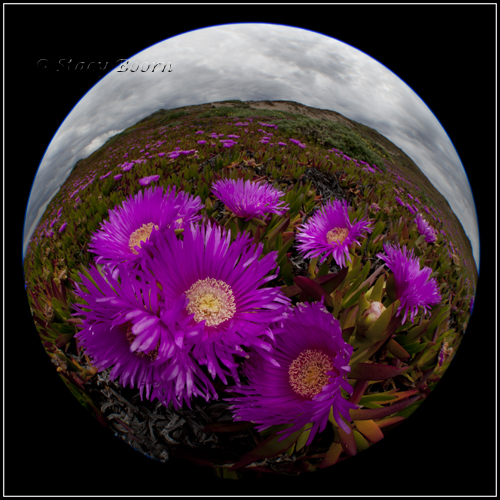
A wide angle (8mm) lens on a full sensor camera helped me create the spherically capture of these North Beach, Point Reyes’ coastal dunes draped in ice plant.  Although a non-native, the ice plant has found its home on the California coast for quite some time.  In order to get the pink bloom this size in the image I had my lens a mere half-inch away from its petals.  (I chose f/22 to guarantee the hyperfocal distance would include focus in the clouds).

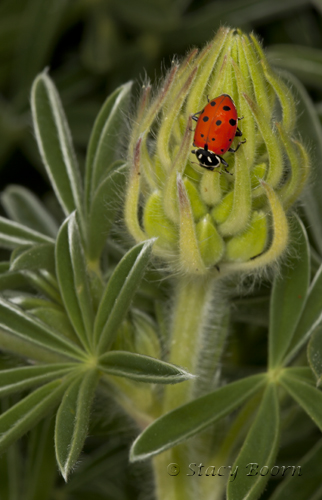
After spending time with wide-angle views it is fun to look closely at the details within the same scene.  Using a 100 mm macro lens I was able to include a lady bug on a yellow lupine bud.  The lady bug is yet another influential mother in our lives!  Happy Mothers Day!

Posted in Weekly 2 | Tagged , , , | Comments Off on May Week 2 – Happy Mothers Day with bugs and buds!

May week 1 – Orchre Stars and friends.

May 1 -SeaStar2013-006 webThe Ochre Star is a wonderful subject at low tide.  You will often see them near mussel beds since it is one of their sources of food.  I prefer mine steamed, thank you!  The stars can be orange or purple or brown. When the tide goes out, their skin and arms become stiff and hard for protection from predators. Occasionally they will get stranded on the sand and then they can be easily moved into your “frame” without hurting them.

Usually for low tide photography I like to carry as little equipment as possible so I don’t accidentally knock an expensive lens or two into the water.  Often you need some sort of diffusion for tide pools to eliminate some of the reflections and glare on the water. (Camera Body, 18-200mm lens, Polarizing filter, tripod,).

May 1 -SeaStar2013-008 webBut if you arrive in the morning when the sun is still relatively low you might be able to get a good angle on a shallow tide pool as you see here.  Use your polarizing filter to reduce as much reflection as possible.  Look for shallow tidepools, perhaps where the sea star is not fully immersed.  The sun also gives the giant anemones their neon green look.  You get this angle best by being pretty low to the ground/water, so a gardening kneeler is helpful for your knees or tushie.

The giant green anemone is one of the most spectacular animals you can find in the tide pools along the Pacific coast. Giant green anemones live on the rocks of tide pools and in deep channels on exposed rocky shores. They can also be found on concrete pilings in open bays and harbors. From Alaska to Panama, these anemones flourish in the intertidal and sub tidal zones. These large anemones like to eat detached mussels, crabs, sea urchins and small fishes. Their predators include sea snails and sea spiders.

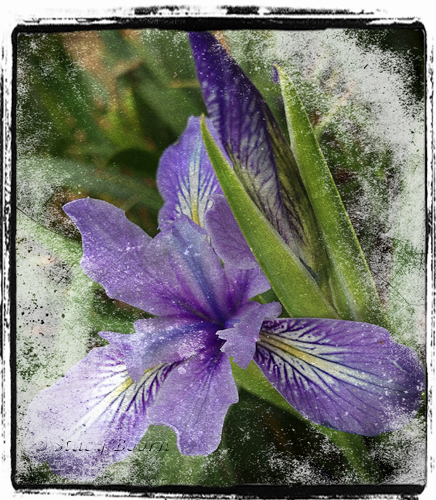
May 1 -IrisArt webIn honor of Cinco De Mayo I offer you an Iris image.  An Iris is a flower that denotes “message.”  May is a wonderful time to hear the messages around us.  Remember how Dolores Huerta co-founded with Caesar Chavez the United Farm Workers.  In 1966 the working conditions in the fields were very bad.

Caesar Chavez considered a potato boycott.  But Dolores Huerta said that in California it would make a greater impact to boycott the grape.  By 1970 the grape industry signed an agreement to improve wages and conditions for the migrant farm workers.  Hopefully this empowerment will continue to places and people still needing justice.  Think of the garment workers in Bangladesh.

Since I am wearing a purple printed blouse, the message of the Iris may be: pay one dollar more per cheap garment so that conditions and wages will be improved for the mostly-women-workers in the factories that supply us with reasonably priced and beautiful clothes.

Posted in Weekly 2 | Tagged , , , | Comments Off on May week 1 – Orchre Stars and friends.

April – The Language of Flowers, the Memory of Love

Canon 7D - 100 mm Macro, Flash

Canon 7D – 100 mm Macro, Flash

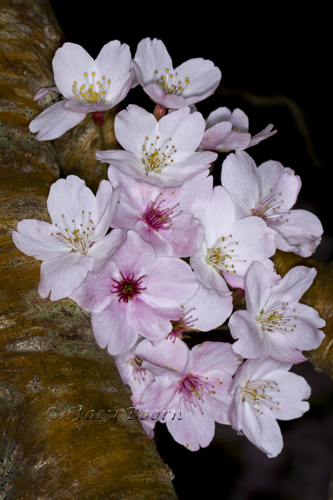
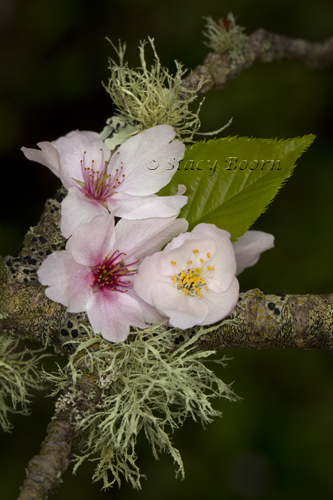
In the first week of April I photographed among the Cherry Trees in Golden Gate Park.  But I was interrupted before I posted them. Since then I learned from Vanessa Diffenbaug’s novel “The Language of Flowers” that the cherry blossom means “impermanence.”  The Victorian language of flowers was used to convey everything from devoted love to mistrust and jealousy.

The flower is appropriate for my own memories since this past week I journeyed back to Schenectady, New York, to join my brothers and their families to conduct our dad’s funeral.  No matter at what stage or age of life, the death of our parents still brings sadness as we let go of that relationship which our childhood eyes saw as permanent.  We are reminded that like the cherry we each have much to offer throughout the blossom of life, but still we are transient beings.

Canon 7D, 100 mm Macro - Ring-lite Flash

Canon 7D, 100 mm Macro – Ring-lite Flash

These images of the cherry blossom are much in the style of my father’s love for flora photography:  get in close, fill the frame with the beauty of your subject and let the color pop!  Most of the cherry trees in Golden Gate Park are past their peak or now completely covered with their emerging green leaves. And unfortunately today garbage gathers around many of their trunks after the huge 4-20 this past weekend (but we won’t hold it against the marijuana itself).

The exact time we gathered to close dad’s casket the first bomb went off near the finish line of the Boston Marathon.  This act is another palpable reminder of the impermanence of life.  This time garnered by anger, mistrust, violence, and hatred.

In imagery or bouquet I will seek to include the cranberry, the flower/plant, which brings “cure for heartache” as we move from last week to a new day.

iPhone Capture - XnView Fx Ap

iPhone Capture – XnView Fx Ap

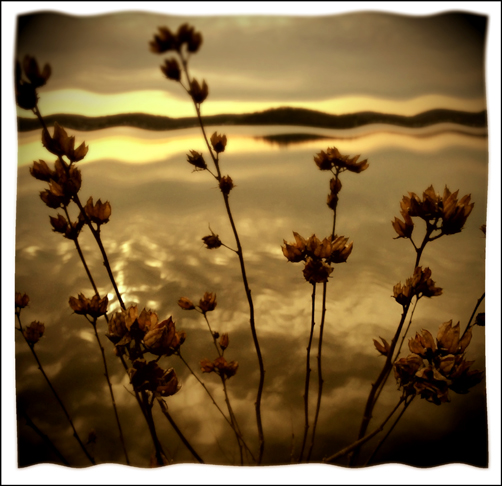
A few days before and a few days after the burial I walked the road in Riley Cove on Saratoga Lake.  Carl and Marian have built a beautiful home on the property where our grandparents had a camp since 1930.  This square sepia-tone image captured and processed on my iPhone is a good impression of those “not-yet-spring-in-the-air” mornings.  But fortunately this too is impermanent and the renewal of the earth in that place is already set in motion.

In addition to my dad’s  artistic eye he was a talented trumpet player.  The Central Park Junior High School Script of June 21, 1944 reported: “Jim Boorn can really hit the high notes, Boy, can he play Mairzy Doats.”

Be sure to clink on the link to “The Language of Flowers,” a mesmerizing and heart melting novel.

Posted in Weekly 2 | Tagged , , , , | Comments Off on April – The Language of Flowers, the Memory of Love

March Week 4 – Dressed in Purple for the Spring Show

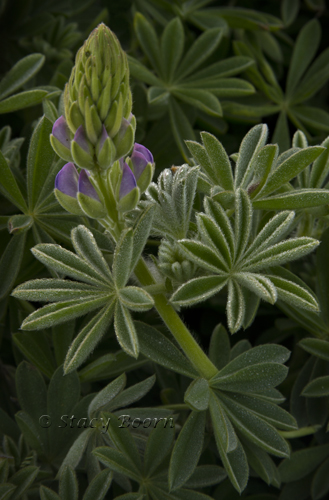
Iris Bud f/29 and Blossom f/3.0 - Pt. Reyes National Seashore

Iris Bud f/29 and Blossom f/3.0 – Pt. Reyes National Seashore

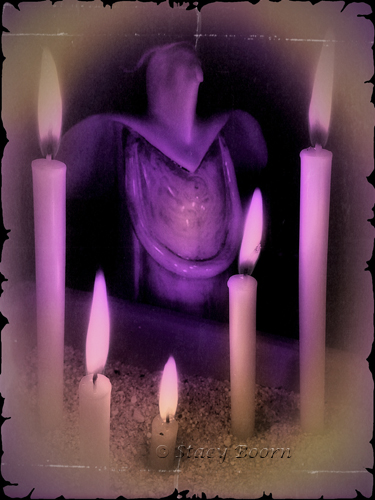
Bird Goddess and Prayer Candles - herchurch

Bird Goddess and Prayer Candles – herchurch

Purple Goddess
purple resurrection of She
the color of her glory and compassion
Iris, Lupine, Larkspur, Chinese Houses –
local expressions of her presence
among the shrubs, tall grasses
and their own turned-over leaves.
 
We have moved from
                the purple of Lent
to White of Easter,
               yet herstory remains
cloaked in purples of every shade
purple resurrection of SHE
returning to the mother of us all
naming the sisters too long silenced
reclaiming the daughter rising.


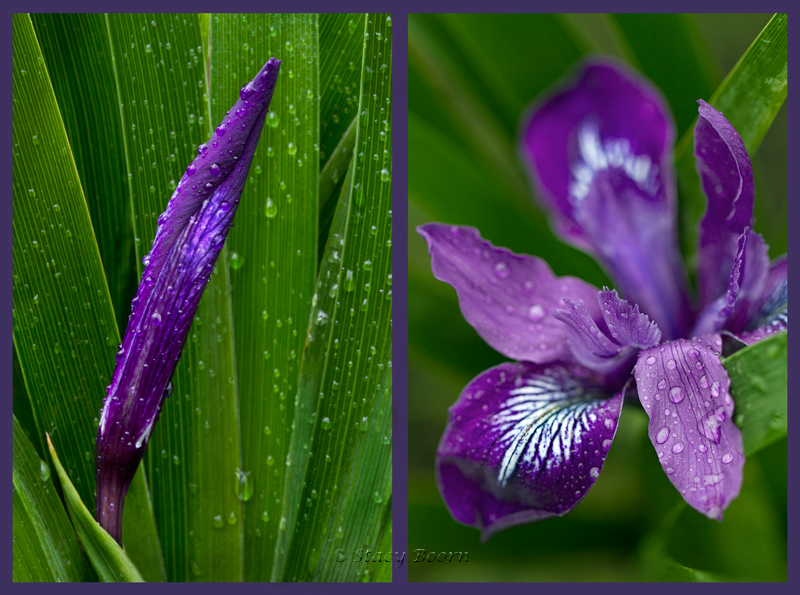
Photo insights:  The Iris bud was photographed using lots of depth of field (f/29) so that sharpness could be obtained pretty much throughout the image.  But for the blossom I chose a shallow depth-of-field to emphasize just a portion of a petal and the dew drops on it (f/3.0).  More depth of field would have also brought the background somewhat into focus rendering it very busy and distracting.  PS – “Chinese Houses” is the common name of a wildflower.

The Bird Goddess (made by artist Annette Wagner) standing behind the prayer candles was photographed with my iPhone and tweaked first in the Snapseed Ap and then the Old Time Photograph Ap.

Yes, I celebrate both the resurrection of the Christ-Sophia and the rebirth of the Goddess!  See in these images how they are part of the same love story…

Posted in Weekly 2 | Tagged , , , , | Comments Off on March Week 4 – Dressed in Purple for the Spring Show

March Week 3 – Stop and SEE the flowers. You will be blessed!

Seacoast Lupine - overcast morning.

Seacoast Lupine – overcast morning.

Wildflowers are living metaphors of rebirth, hope, love, transformation and renewal.  Their reappearance every year is a sign that Earth herself returns to the rhythms and seasonal cycles that have been repeated for countless millennia.  As they blossom, their gospel proclaims we are inter-connected and share the same time, space and web of life with all other living things.

The crew of Apollo 8, in 1968, sent home the first photograph of the earth.  It was that majestic blue and green orb in a vast black infinity.  Who knew that it would become the most awe-filled image in history?  But I believe as important as that icon is, we also need the diverse detail captures of every inch, in every season, of this planet we call home.

May these sensations of springtime help us both appreciate and care for the planet that has sustained us.  Flowers appeared on Earth some one hundred and thirty million years ago between the toes and tails of the dinosaurs.  Georgia O’Keeffe wrote, “Nobody sees a flower, really.  It is so small it takes time – we haven’t time – and to see takes time, like to have a friend takes time.”

Star Lily - photographed with flash.  Marin, CA

Star Lily – photographed with flash. Marin, CA

In addition to rendering the essence of wildflowers and my experience of them through various photographic and post processing techniques (last week’s post), I also enjoy allowing the flowers to present themselves.  To make these images I use as much depth-of-field (focus) as possible.  Early mornings with little wind make these captures possible, and a little bit of fog helps saturate the hues.

But when the breeze kicks in, even the slightest of movements, it becomes very challenging.  So then I will add a flash to assist in providing enough light to freeze the flowers in fractions of seconds.   Stop and SEE the flowers.  Taking the time will be well worth it as they grace you with experiences of rebirth, hope, love, transformation and renewal.

Posted in Weekly 2 | Tagged , , , | Comments Off on March Week 3 – Stop and SEE the flowers. You will be blessed!

March Week 2 – Yellow and Orange, Balm of Healing

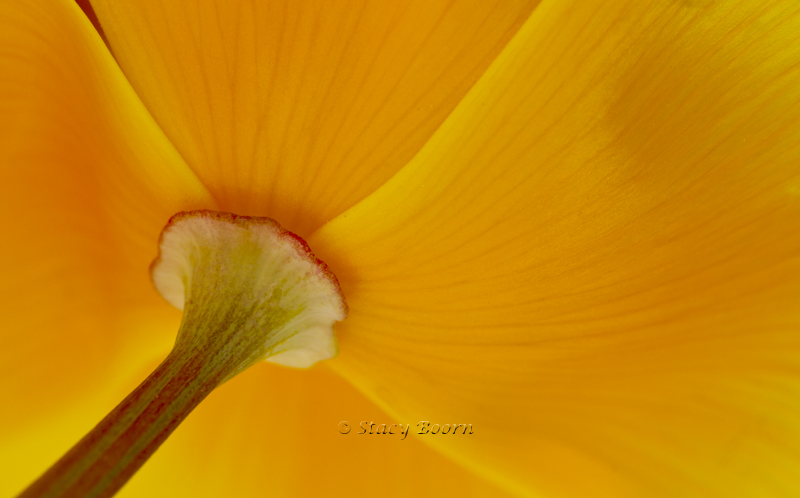
March2-Poppy008WebInterior Designers tell us the beautiful warm colors of yellow and orange go well together.  You only need to look at the coastal poppies to know that.  Perhaps these colors which call spring out of the earth and us also bring their own balm of healing.   Yellow and orange seem to have a special nature that signals both comfort and vibrant emotions.

Although you can find some poppies blooming somewhere all year long in California, this time of year in the Bay Area you begin to see them more plentiful coast side and urban street side.  They even have their own song.

March2-Poppy001 copyCalifornia Poppy Song
 
Poppies, golden Poppies, gleaming in the sun,
Closing up at evening, when the day is done.
Pride of California, flower of our state
Growing from the mountains, to the Golden Gate.
 
Flower of the hillside, flower of the plain.
Flower of the sunshine, flower of the rain.
California’s children, be they far or near,
Love the golden poppy, of our state so dear.
 

For some years I felt a little intimidated trying to make poppies one of my main focuses.  After all I was living in the same state with the poppy photographer par-excellence.  Although George Lepp no longer resides in California his legacy of poppy photography is still in the very air we breathe.  But after learning many techniques from George Lepp I am finally confident that I have my own vision of the art of the poppy.

The images I am sharing from this past week were taken at Kehoe Beach in Point Reyes National Seashore where you can usually find some of the first of the wildflower shows.  They weren’t quite there yet, although some lovely individual blossoms and groups of coast poppies were prominent.   While the California Poppy is one shade of orange the coastal are both yellow and orange.

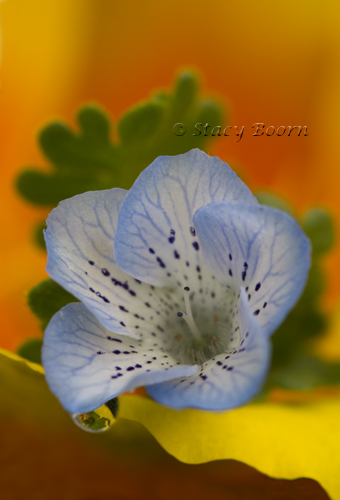
March2-BabyBlue EyesWebWanting to just capture the feel of the colors I choose to get in close using a 100mm macro lens and a shallow depth of field so only a small selection of the composition was in focus.  The wind usually blows pretty strongly in this location even early in the morning.  So using a shallow depth of field (here 2.8) you can obtain a pretty fast shutter speed.  You just have to be careful that the intended point of focus is not blown out of its position.

Yellow and Orange remind me of the painting “Mother and Daughter” by Meinrad Craighead.  It is on the cover of her book “The Mother Songs -Images of God the Mother.”  It may be more red and yellow, because the shared fruit between the mother and daughter is a pomegranate, but nonetheless the two looking eye to eye have the comfort and challenge that the yellow and orange need to bring to us this day.

Posted in Weekly 2 | Tagged , , | Comments Off on March Week 2 – Yellow and Orange, Balm of Healing

March week 1 – Are we seeing white yet?

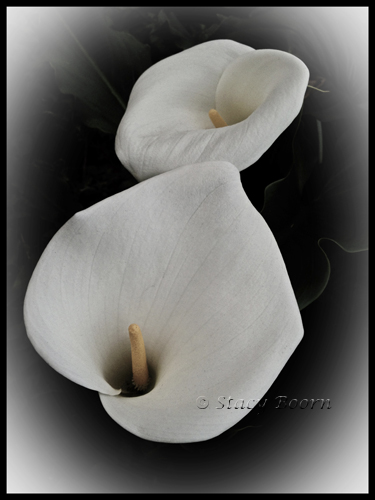
Mar1-Cala Lily 02 webOne-petaled white flowers filled the sanctuary of the church.  Single thick stems reaching two to three feet heavenward with arrowhead shaped leaves were jam-packed into pots, vases and aluminum foil holders.  It was as if they were standing at attention waiting for the first round of “Alleluias.”

But they were not Easter Lilies and, to the best of my recollection, even from the recesses of my childhood memories this flower never filled the congregations of my East Coast religious experiences.  For the first few years of my West Coast life I heard their name as Cali Lily.  I thought that was short for California Lily.  It seemed possible since I saw them growing in nearly every yard, along coastal slopes and in various parts of Golden Gate Park.

Mar1-Cala Lily 03 webFinally spell check helped me realize they were far from native California plants.  Then I discovered the calla lily was not a lily at all, and although it is related to the calla genus, it is not really a calla either. Calla lily is actually the common name for the zantedeschia genus.  It is a genus of twenty-eight different species all native to the southern parts of Africa with a tropical climate.

The Calla Lily is a beautiful flower and over the years it has become very popular especially in Europe and the United States for weddings and various festive celebrations. Now I wait for their arrival every spring to photograph them and hope one of my images will finally hold a candle to those created by Mapplethorpe. Their plentiful beds remind us to not overlook common or ordinary plants/people/things because there is always a new angle or photographic technique to max their stunning magnificence.

My colleague the Rev. Elizabeth Eckdale, pastor of St. Mark’s Lutheran Church in San Francisco, loves anthuriums.  But until I create a new anthurium image I dedicate these Calla Lily shots to her in honor of her 25th anniversary of ordained ministry in the Lutheran Church.  Congrats!
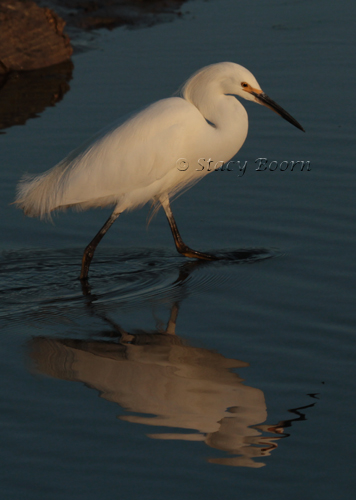
Mar1-Snowy Egret web

Snowy Egret in late afternoon light

White is a very difficult subject to photograph because an in-camera-meter will read the light on your subject and renders it as a medium tone.  Without any compensation for this your image will be underexposed.  The simple solution is to over expose by 1 to 2 stops.  If your camera is evaluating the light from multiple spots in your image your exposure might be okay. (But snow, wedding dresses, white smoke from the Vatican and egrets will be a challenge.)

The Great Egret is the largest white egret in the United States. A Great Egret can be distinguished by its large size, yellow bill and black legs.  There are three species of egret that are typically white in color as adults: Great, Snowy and Cattle.  You can find all of these locally.  My three favorite locations for the Great and Snowy Egrets are Golden Gate Park, Larkspur Marsh Bird Refuge and the lagoon near Stinson Beach.

No feathers fly alone.  I am in favor of conclaves of buds and birds.  (Yes, read into that!)
Posted in Weekly 2 | Tagged , , , , | Comments Off on March week 1 – Are we seeing white yet?

February Week 4 – Over and on the ocean … seeds and surfers

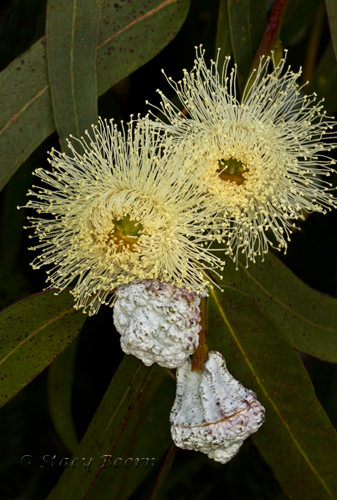
Feb 4 -  Eucalyptus webIn 1849, some 2,500 people left Sydney, Australia for San Francisco.  They traveled in American clipper ships and slower moving vessels.  It was among these voyagers and their ships that the first eucalyptus seeds were transported to California.

The seeds are very tiny so thousands came in each small sack. The fast growing trees were needed to produce wood and fuel for the settlements.   They were also planted for their shade and beauty.  They grew fast and huge.

Most accounts credit W.C. Walker as the first planter of eucalyptus in California in 1853.  He was the owner of the Golden Gate Nursery in San Francisco.  Within a few years Walker was selling  several varieties of Eucalyptus. And thus began the coastal population of small and large groupings of  eucalyptus tress that quickly assumed a native tree attitude – foresting hillsides.

Without thought to their immigration status, new arrivals to California, like myself some twenty-five years ago, often assume the towering eucalyptus were here forever as a native icon.  Regardless, their spring blooms are once again arriving and these closely photographed flowers are from a stand on highway 1 just east of the Pigeon Pt. Light House. Others are blooming right here in the city.  People can be naturalized, but it is more complicated with plants, apparently. (i.e.  Save Mount Sutro Eucalyptus Forest vs. UCSF proposed cutting.)

Not far from a grove of eucalyptus trees in Santa Cruz you find locals and folks from around the globe tracking the waves either on surf boards or from the lighthouse observation area.

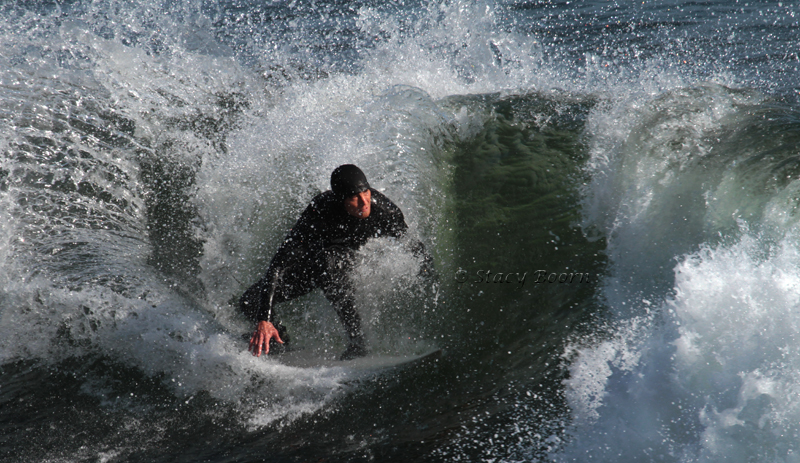
Feb 4 - Surfer webWinter afternoons can feel like spring when the sunlight streaks across the surfer’s faces and the waves of the Monterey Bay. Santa Cruz is about 75 miles South of San Francisco on the northern end of the Monterey Bay. Cowells beach is located on West Cliff Drive, near Bay Ave. Just up from Cowells is Steamers Lane at the Surfing Museum housed in the Mark Abbott Memorial Lighthouse.

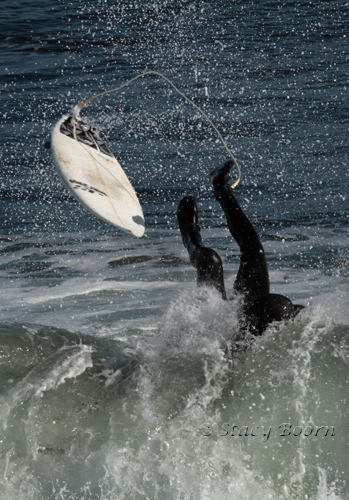
Feb 4 - Surfer Legs webThis location is one of the most accessible places to photograph the fine points of surfing without jumping into the water.  Although you are above the surfers you can minimize the slope by using a long lens and selecting individuals heading towards you from a distance.  No iPhone photography here!

Try a 400 mm lens, ISO 400 and a shutter speed no slower than 1/640 of a second. Keep the sun over your shoulder and on the face of the surfer.  (I always take my meter reading off the ocean water and then manually dial that reading into my camera.  Otherwise the white surf may throw the exposure off.)

Catching the wave is their goal – catching their turns and tumbles is my goal.

Posted in Weekly 2 | Tagged , , | Comments Off on February Week 4 – Over and on the ocean … seeds and surfers

February Week 3 – Stars in the Forest and in the Sky

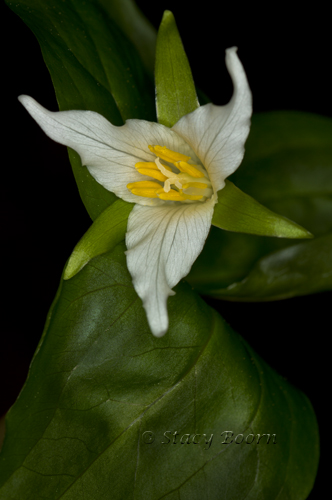
Feb 3 - Trillium copyWalking into the redwoods on Mt. Tamalpias always provides a sensual experience: the feel of the soft-needled floor of the forest, the smell of the bay leaves, the sounds of silence interrupted by the call of the raven, the sight of everything green and the cool of the brisk still-winter morning air.

Since I don’t take extensive notes of these forays I pay special attention to the few that I have written down.  “April was a bit late for the western trillium. Try next year mid-February.”  Since I was returning to a familiar location I had in mind to present the western trillium differently.

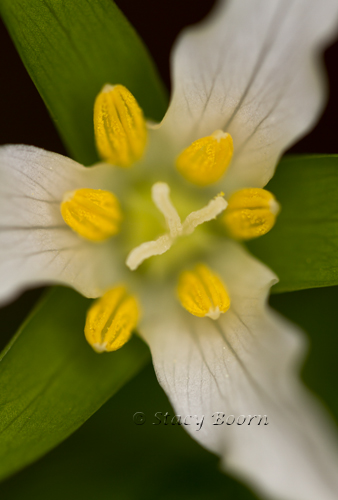
Having grown up in New York I was accustomed to seeing trilliums in the forest that had broad petals some 3-6 inches long.  Or maybe they grew larger in my imagination.  But the western trilliums in the Bay Area seem to be quite small with each thin petal about one or two inches long.

Feb wk 3 - tril 2 copyThey stand only  8 – 12 inches high so you best commune with this exquisite plant by lying down on the ground.

As the trilliums (three petals and three sepals) under the coastal redwoods begin to fade they will go from white to pink to cranberry-ish colors.  This progression prompts me to remember that aging can be seen as beautiful transformations rather than something to cover up, dread and fear.

The first image of this newly blossomed trillium is up close and personal and made with a very shallow depth-of-field so that only a few edges of the stamen are in focus.  I encourage you to enter its beauty through those sharp edges and linger in the soft out-of-focus areas to get a feel for the essence of this plant.  (My tools included a Canon 7D, 100mm macro lens, ring-light flash and tripod.)

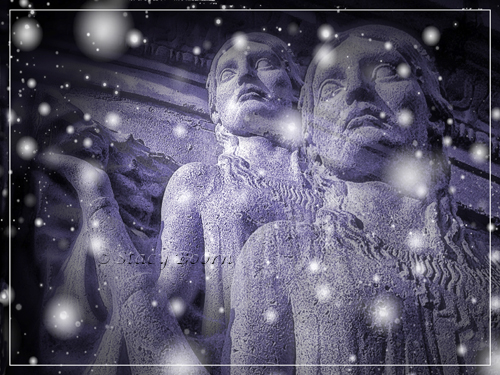
Feb 3 - her galaxy webMy second image is called “Her-Galaxy” and started as a photo I made of a detail on the Palace of Fine Art.  I created a double exposure, de-saturated the image and added a filter that is called “snow.”  But I am hoping the white orbs will be viewed as a galaxy of planets. (My tools for this image included my iPhone and a couple of Aps.)

While doomsday deadline is approaching on Capitol Hill, the western trillium continue to bloom on our local hills and the stars in the heavens shine brightly at night.  What do we need to learn from the wisdom of the earth and the vast galaxies around her?

Posted in Weekly 2 | Tagged , , , | Comments Off on February Week 3 – Stars in the Forest and in the Sky